
Crushed carpet pile is one of the most common complaints after professional cleaning or heavy foot traffic. The fibers mat down, the surface looks dull and flat, and no amount of vacuuming seems to fix it. The right pile lifting tool changes that completely. Choosing the wrong one, though, can snag loops, split yarn, or push damage deeper into the backing.
This guide covers every major pile lifting tool, how each one works at the fiber level, which carpet constructions they suit best, and how to build a grooming sequence that actually restores appearance. Whether you’re a professional technician or a facility manager overseeing a commercial property, you’ll leave here with a clear, actionable plan.
Key Takeaways
- CRB machines are the most effective mechanical option for cut pile carpets because counter-rotating brushes lift fibers in multiple directions simultaneously.
- Carpet rakes are the best manual tool for post-extraction grooming on medium and high pile constructions.
- Grooming after cleaning is not optional — it sets pile direction, speeds drying, and restores fiber memory.
- Loop pile and Berber carpets require softer, non-penetrating tools to avoid loop snags and yarn pulls.
- Pile direction matters — always groom toward the light source or primary viewing angle for the best visual result.
- Heat combined with mechanical agitation is the most effective way to restore severely crushed pile, especially in synthetic fibers like nylon and polyester.
What Are Carpet Pile Lifting Tools and Why Do They Matter?
Quick Answer: Carpet pile lifting tools are devices — mechanical or manual — that restore compressed carpet fibers to an upright position. They include CRB machines, carpet rakes, grooming tools, and bonnets. They matter because crushed pile traps soil, dulls appearance, and resists future cleaning.
Carpet fibers are engineered to stand upright. When foot traffic, furniture weight, or cleaning equipment compresses them repeatedly, the fiber shafts bend at the base and stay that way. This is called pile crushing or pile distortion, and it’s different from wear — the fiber is still intact, just flattened.
Pile lifting tools work by introducing mechanical energy into the fiber shaft. That energy overcomes the compression memory and encourages the fiber back toward its original angle. Some tools do this passively with stiff tines. Others use rotating brushes spinning at high RPM to hit fibers from multiple directions in a single pass.
Beyond appearance, there’s a functional reason to lift pile. Upright fibers trap and release soil more efficiently during vacuuming. Flat fibers hold soil at the base, where it causes abrasive damage. Groomed carpet also dries faster after wet cleaning because airflow can move between individual fiber shafts rather than across a flat, compressed surface.
What Is a CRB Machine and How Does It Lift Pile?
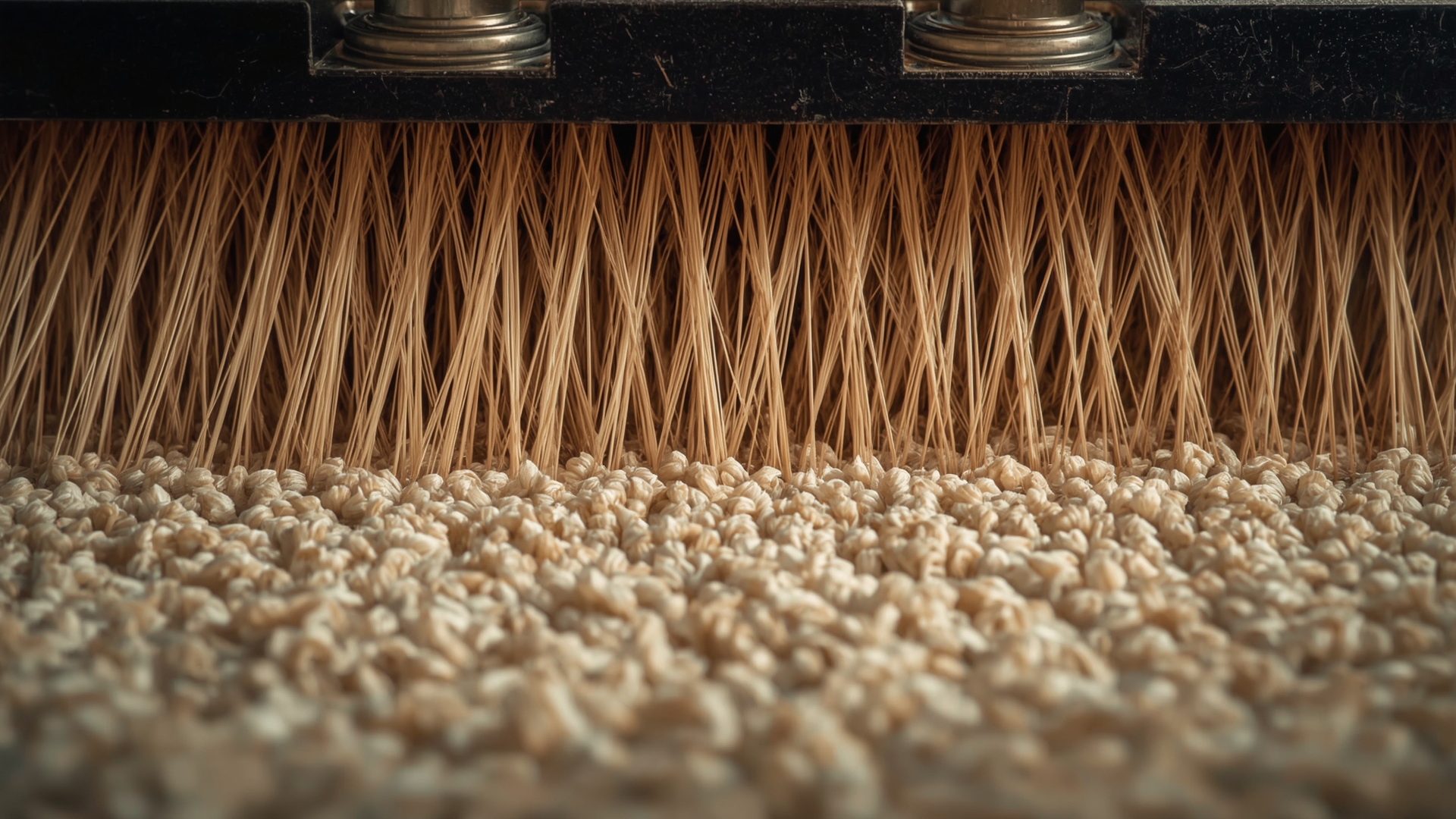
Quick Answer: A CRB, or counter-rotating brush machine, uses two cylindrical brushes spinning in opposite directions at 150–200 RPM. This simultaneous opposing motion lifts fibers from multiple angles, making it the most effective mechanical pile restoration tool for cut pile carpets.
How Counter-Rotating Brushes Work on Carpet Fiber
Standard rotary machines spin in one direction. A CRB spins two brushes — one clockwise, one counterclockwise — at the same time. As those brushes contact carpet fibers, they flex them forward, backward, and side to side in rapid succession.
That multi-directional flexing is what separates CRBs from every other powered tool. A single-direction rotary brush can push fibers flat in the same direction it’s spinning. CRBs avoid this by canceling directional bias. The result is fibers that stand up rather than lean.
CRB Machine Specifications and Performance Data
| CRB Machine Model Type | Brush RPM | Path Width | Motor Power | Best Application | Pile Height Limit |
|---|---|---|---|---|---|
| Compact Residential CRB | 150–170 RPM | 11–13 inches | 1/3 HP | Residential cut pile, Saxony | Up to 3/4 inch |
| Standard Professional CRB | 170–190 RPM | 15–17 inches | 1/2 HP | Commercial cut pile, frieze | Up to 1 inch |
| Wide-Body Commercial CRB | 180–200 RPM | 19–21 inches | 3/4 HP | Large commercial spaces, Berber (soft brush) | Up to 1/2 inch (Berber) |
| Encapsulation CRB Combo | 160–185 RPM | 15–17 inches | 1/2 HP | Interim commercial maintenance with encapsulation chemistry | Up to 3/4 inch |
Which Carpet Types Should Not Use a Standard CRB?
Loop pile carpets — including Berber — are high risk with standard CRB brush configurations. The stiff nylon bristles on most professional CRBs can catch individual loops and pull them out of the backing. Even a small snag creates a pull that runs across several loops, creating a visible line of damage.
If you need mechanical agitation on loop pile, use a CRB fitted with softer, shorter polyester bristles specifically rated for loop pile. The brush should glide across loop tops, not penetrate between them. Always test a small inconspicuous area first and check for snagging before covering a full room.
What Is a Carpet Rake and When Should You Use One?

Quick Answer: A carpet rake is a long-handled manual grooming tool with rigid or flexible tines spaced 1/4 to 1/2 inch apart. You use it after extraction cleaning to lift pile, distribute cleaning agents evenly, and set the direction of fibers before drying. It’s fast, low-risk, and works on most pile types.
Carpet Rake Construction and Tine Design
Carpet rakes come in two main tine materials: stainless steel and hard plastic. Steel tines are stiffer and penetrate deeper into dense cut pile. Plastic tines flex more, making them safer for loop pile and delicate fibers like wool.
Tine spacing determines how the tool interacts with fiber density. Widely spaced tines (3/8–1/2 inch apart) work on shag and frieze, where you need to get between thick, twisted fibers. Closely spaced tines (1/4–3/8 inch apart) suit medium-density cut pile like Saxony and plush.
Head width typically ranges from 8 to 14 inches. Wider heads cover more area per stroke but require more physical effort on dense pile. Most professional technicians prefer a 12-inch head with a telescoping aluminum handle set to waist height to reduce lower back strain during large commercial jobs.
Carpet Rake Types and Specifications
| Rake Type | Tine Material | Tine Spacing | Head Width | Best For | Risk Level on Loop Pile |
|---|---|---|---|---|---|
| Standard Grooming Rake | Stainless steel | 3/8 inch | 12 inches | Medium cut pile, Saxony, plush | Moderate |
| Shag/Frieze Rake | Stainless steel | 1/2 inch | 10–12 inches | High pile, frieze, shag | Moderate to high |
| Soft Plastic Grooming Rake | Hard polypropylene | 1/4–3/8 inch | 10–14 inches | Loop pile, Berber, wool cut pile | Low |
| Wide Commercial Rake | Stainless steel | 3/8 inch | 14–16 inches | Large commercial cut pile areas | Moderate |
How Do Carpet Grooming Tools Differ from Carpet Rakes?
Quick Answer: Carpet rakes use rigid tines to penetrate the pile and lift fibers mechanically. Carpet groomers use soft, densely packed bristles to sweep pile into a uniform direction. Rakes restore severely crushed fiber. Groomers finish the job by setting pile direction for a consistent appearance.
Think of rakes and groomers as two stages of the same process. A rake is like a deep comb — it separates, lifts, and aerates fibers that have been matted down. A groomer is like a finishing brush — it aligns everything in one direction for a clean, even appearance.
Groomers are especially useful when applying carpet protector after cleaning. Distributing protector with a groomer after application ensures every fiber shaft gets coated from base to tip rather than just on the face of the pile where a rake tine touches.
When to Use Each Tool in the Cleaning Sequence
- Pre-clean rake: Rake against the pile direction before extraction. This opens the fiber shafts and improves cleaning agent penetration.
- Post-extraction rake: Immediately after extraction, rake with the pile direction to remove tine tracks and lift crushed fibers while they’re damp and more pliable.
- Protector application groomer: Brush protector into the pile from multiple angles to maximize fiber coating coverage.
- Final groomer pass: Groom in one direction toward the primary viewing angle or light source. This is the last step before the carpet dries.
What Is a Pile Lifter Vacuum and Is It Worth Using?
Quick Answer: A pile lifter vacuum combines strong upward suction with an agitator brush to stand fibers upright while removing embedded soil. It works best as a pre-cleaning step on heavily soiled, matted carpet. It’s not a substitute for a CRB or grooming rake after wet extraction.
A pile lifter operates differently from a standard vacuum. It’s set higher off the carpet surface, and its brush agitator runs slower to encourage fibers upward rather than flatten them. The suction channel is positioned to pull both loosened soil and upright fibers toward the intake simultaneously.
These machines are common in commercial maintenance programs, particularly before scheduled hot water extraction. By pre-lifting the pile and removing embedded dry soil, the extraction machine works more effectively and leaves less soil in the fiber base after cleaning.
How Do Bonnets and Spin Pads Affect Carpet Pile?
Quick Answer: Bonnets are absorbent pads attached to a rotary floor machine, spinning at 175–300 RPM. They can lightly lift pile on low-density commercial carpet during interim cleaning, but they risk crushing pile on residential cut pile and never substitute for deep pile restoration tools.
Bonnet cleaning is most common in commercial hotel and office environments on low-pile commercial broadloom. The spinning bonnet absorbs surface soil and the light agitation brings some fibers to attention. On taller or softer residential pile, the same motion often presses fibers flat.
If you’re using bonnet cleaning as part of a maintenance program, always follow up with a grooming rake. The rake corrects any directional flattening the bonnet introduced and gives the surface a uniform finished appearance before the next service visit.
Which Pile Lifting Tool Works Best for Each Carpet Construction?
Quick Answer: Cut pile carpets respond best to CRB machines and grooming rakes with steel tines. Loop pile carpets need soft plastic rakes or loop-rated CRB brush heads. Frieze and textured cut pile need wide-spaced tines. Wool carpets require gentler tools with lower RPM and softer bristle materials.
Tool Selection by Carpet Fiber and Construction
| Carpet Type | Primary Pile Tool | Rake Tine Type | CRB Bristle Rating | Risk Factors | Post-Clean Groomer |
|---|---|---|---|---|---|
| Saxony / Plush (nylon) | Professional CRB | Steel, 3/8 inch spacing | Standard nylon bristle | Shading if raked cross-grain | Yes — final direction pass |
| Frieze / Twist Pile | Carpet rake | Steel, 1/2 inch spacing | Not recommended | CRB can untwist yarn tips | Optional — frieze is forgiving |
| Berber / Loop Pile | Soft plastic rake | Polypropylene, 1/4 inch | Soft polyester bristle only | Loop snag, yarn pull | Yes — gentle direction pass |
| Commercial Cut Pile (low) | Wide CRB or pile lifter | Steel, 3/8 inch spacing | Standard nylon bristle | Minimal — dense backing | Yes — high-traffic areas |
| Wool Cut Pile | Soft plastic rake | Polypropylene or soft steel | Soft polyester bristle only | Fiber tip fraying, scale damage | Yes — always |
| Polyester Cut Pile | CRB or carpet rake | Steel, 3/8 inch spacing | Standard nylon bristle | Fiber matting if reheated incorrectly | Yes — sets permanent direction |
How Does Pile Direction Affect the Visual Result of Grooming?
Quick Answer: Carpet fibers reflect light differently depending on which direction they lean. Fibers angled toward a viewer appear lighter. Fibers angled away appear darker. Grooming all pile in one consistent direction eliminates patchy, uneven appearances and creates the clean, uniform look clients expect after professional cleaning.
This effect is most visible on Saxony and plush cut pile. Run your hand across the surface in two directions — one looks distinctly lighter and more reflective, one darker and more matte. That’s the pile direction in action.
Professional technicians groom toward the primary light source in residential rooms, which is usually a window or sliding glass door. In commercial settings, groomers groom away from the room entrance so the pile faces up toward anyone walking in — this gives the cleanest visual impression at first glance.
Inconsistent pile direction after grooming is one of the most common complaints in post-cleaning callbacks. It’s entirely preventable by finishing every section of carpet with the same final rake stroke direction before leaving the room to dry.
Can You Restore Severely Crushed Carpet Pile Without Professional Equipment?

Quick Answer: Yes, with limitations. A carpet rake, ice cubes for furniture dents, and a clothes iron with a damp cloth can restore moderate crushing in cut pile fibers. However, severe distortion across large areas — especially in commercial settings — needs a CRB machine to achieve full restoration efficiently.
DIY Methods for Furniture Dents and Localized Crushing
Furniture dents in cut pile carpet respond well to a simple two-step method. Place two or three ice cubes directly in the dent and let them melt completely. As the water is absorbed, the fibers absorb moisture and the fiber shaft begins to return to its original shape. Once dry, use a stiff-bristle brush or carpet rake to lift the area fully.
For larger flattened areas, a clothes iron set to low steam held 1–2 inches above the carpet surface (never directly touching synthetic fibers) introduces heat and moisture simultaneously. Move the iron slowly over the area, then immediately work a carpet rake through the damp fibers in an upward motion. The heat softens the fiber memory, the moisture adds pliability, and the rake resets the direction before the fiber cools and sets in its new position.
Limitations of DIY Pile Restoration
- Loop pile: DIY methods carry high risk of snagging on loop constructions. A professional assessment is recommended before attempting any mechanical lifting.
- Wool fiber: Steam and heat can cause shrinkage or fiber tip damage. Cold water and a soft brush are safer for wool pile restoration.
- Large areas: Manual raking a 2,000-square-foot commercial space is impractical. A pile lifter or CRB covers that space in a fraction of the time with more consistent results.
- Permanent fiber distortion: If the fiber shaft has broken rather than bent, no tool can restore it. This appears as a whitish, fuzzy texture at the pile surface and indicates physical fiber damage, not compression.
What Is the Correct Grooming Sequence After Hot Water Extraction?
Quick Answer: After hot water extraction, groom immediately while the carpet is still damp. Start with a carpet rake against the pile to open fibers. Then pass a grooming tool with the pile direction to set the final angle. This takes 2–4 minutes per room and dramatically improves the finished appearance and dry time.
Step-by-Step Post-Extraction Pile Grooming Process
- Check fiber moisture: The carpet should be damp, not soaking. Excess water in the backing makes raking less effective and can stretch or distort the primary backing on some constructions.
- Start at the far wall: Work backward toward the room entrance so you’re never stepping on groomed sections before they dry.
- Rake against the pile (optional first pass): One light pass against the natural pile direction aerates fibers and removes any residual extraction machine tracks. Skip this on loop pile.
- Rake or groom with the pile direction (primary pass): This is the finishing pass. Use long, even strokes. Overlap each stroke by 2–3 inches so no area is missed.
- Apply protector if scheduled: If a carpet protector treatment is part of the service, apply it now and use a grooming tool to work it into the fiber from multiple angles before the final directional pass.
- Final directional pass: One clean pass with a soft groomer in the intended viewing direction. Remove any visible tine lines from the rake with this pass.
How Do You Maintain Pile Lifting Tools Between Jobs?
Quick Answer: Clean CRB brushes after every job by removing wrapped fibers and rinsing with clean water. Inspect rake tines for bending after each use. Replace CRB brush rolls every 300–500 hours of use. Bent tines on a rake can scratch carpet backing and should be replaced immediately.
CRB Machine Maintenance Schedule
| Maintenance Task | Frequency | Tool Required | Notes |
|---|---|---|---|
| Remove wrapped fibers from brush rolls | After every job | Seam ripper or fiber pick | Wrapped fibers reduce brush effectiveness by up to 40% |
| Rinse brush rolls | After every job | Clean water, stiff utility brush | Prevents chemical residue buildup in bristles |
| Inspect brush roll bristle density | Weekly (high use) or monthly | Visual inspection | Bristles below 80% original density reduce pile agitation |
| Lubricate drive belt and bearing | Every 50 hours of use | Manufacturer-specified lubricant | Prevents motor strain and uneven brush RPM |
| Replace brush rolls | Every 300–500 hours | Replacement roll kit | Worn rolls lose 30–50% of their agitation efficiency |
Carpet Rake Maintenance
Carpet rakes are simple tools, but bent or missing tines are a real problem. A single bent tine creates uneven pressure during each stroke, which shows up as a visible scratch line in the pile surface. Check all tines by running your finger across them before each job.
Most carpet rake heads are replaceable without buying a new handle. Keep a spare head on your vehicle for jobs where a client points out tine damage mid-job. That two-minute swap prevents a callback and protects your reputation.
Frequently Asked Questions About Carpet Pile Lifting Tools
What is the difference between a pile lifter and a carpet groomer?
A pile lifter is a powered machine that uses suction and a rotating brush to stand fibers upright while removing deep-seated soil. A carpet groomer is a manual finishing tool that sets pile direction after cleaning. Pile lifters are pre-cleaning tools. Groomers are post-cleaning finishing tools.
Can a CRB machine damage carpet?
Yes, if used on the wrong carpet type or with the wrong brush configuration. Standard CRB nylon bristles can snag loop pile, pull Berber yarn, and fray delicate wool fiber tips. Always match the CRB brush specification to the carpet construction before running the machine on a full area.
How often should you rake carpet after professional cleaning?
You should rake immediately after every hot water extraction service while the carpet is still damp. For regular maintenance between professional cleanings, a light grooming rake pass after each deep vacuum session helps maintain fiber position and slows visible matting in high-traffic areas.
Does grooming carpet extend its lifespan?
Yes. Upright fibers shed soil more easily during vacuuming, which reduces the abrasive soil contact that wears down fiber shafts over time. Regular grooming combined with a consistent cleaning schedule can extend the appearance life of commercial cut pile carpet by 2–4 years compared to ungroomed carpet in the same traffic conditions.
What carpet pile tool is best for removing traffic lane matting?
A CRB machine with standard nylon bristles is the most effective tool for established traffic lane matting in cut pile carpet. Traffic lanes compress fibers deeply and consistently over months. A single-pass rake rarely restores them fully. Multiple CRB passes followed by a groomer and heat-assisted drying gives the best result.
Is a carpet rake useful on commercial loop tile carpet?
Only if it’s the right rake. Commercial loop tile carpet — commonly found in offices using modular carpet tiles — needs a soft polypropylene rake with closely spaced tines. Steel tines risk pulling loop tufts from the primary backing. A gentle groomer with soft bristles is the safest choice for commercial loop tile maintenance.