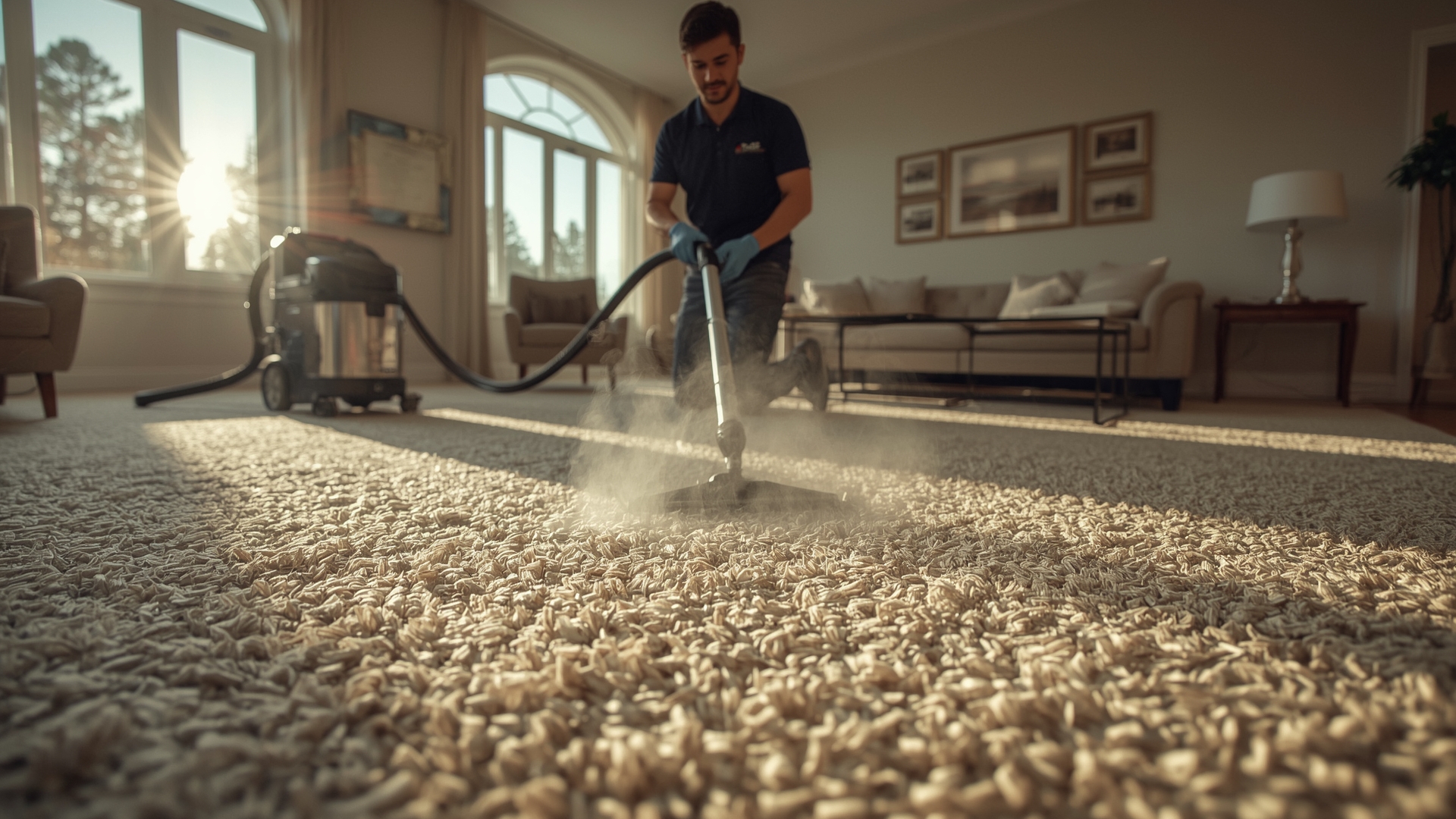
You just had your carpets professionally cleaned. They look great and smell fresh. But within a few weeks, they look darker and dirtier than before — sometimes worse than before the cleaning. This is resoiling, and it’s one of the most common complaints in carpet care.
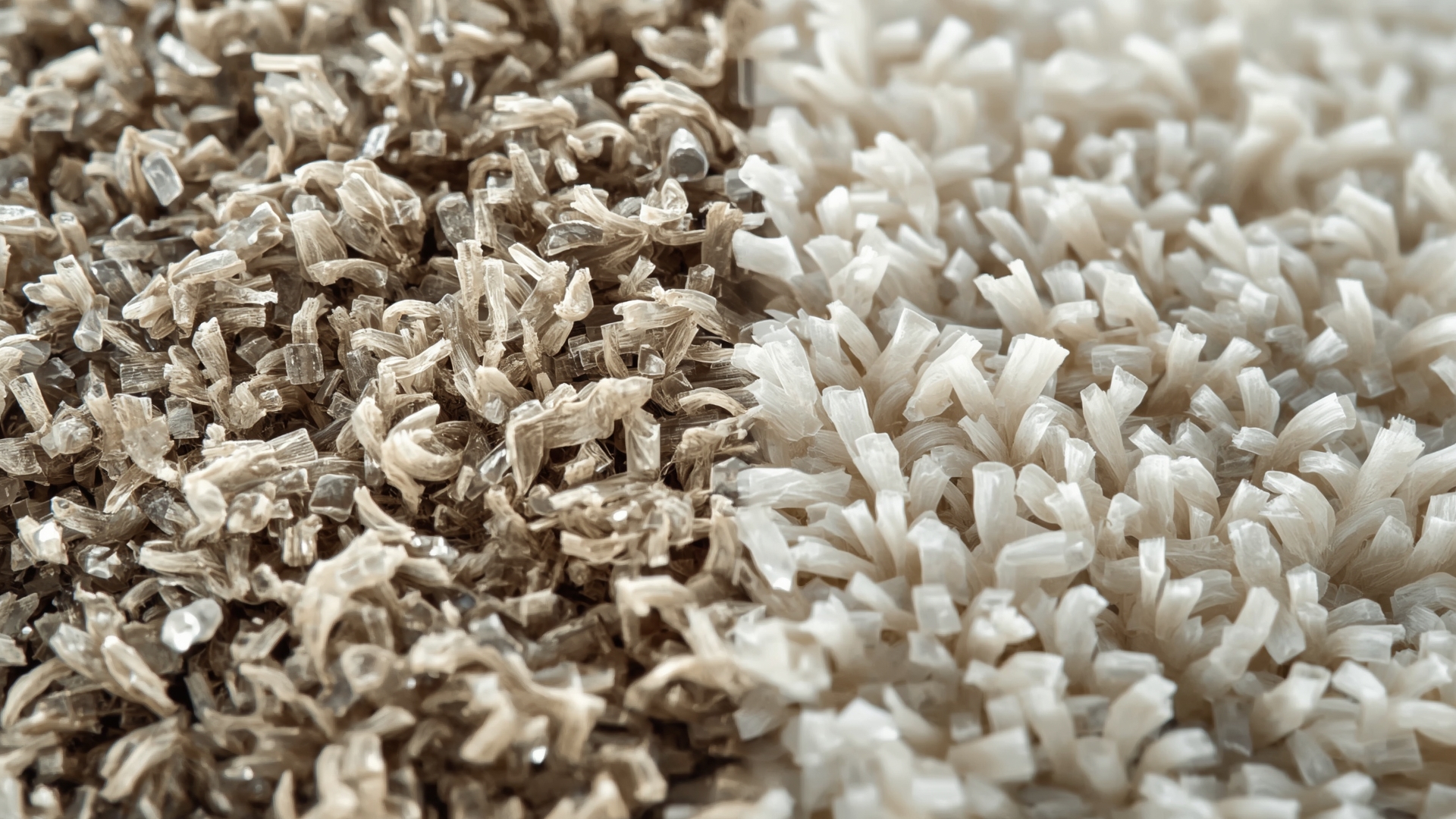
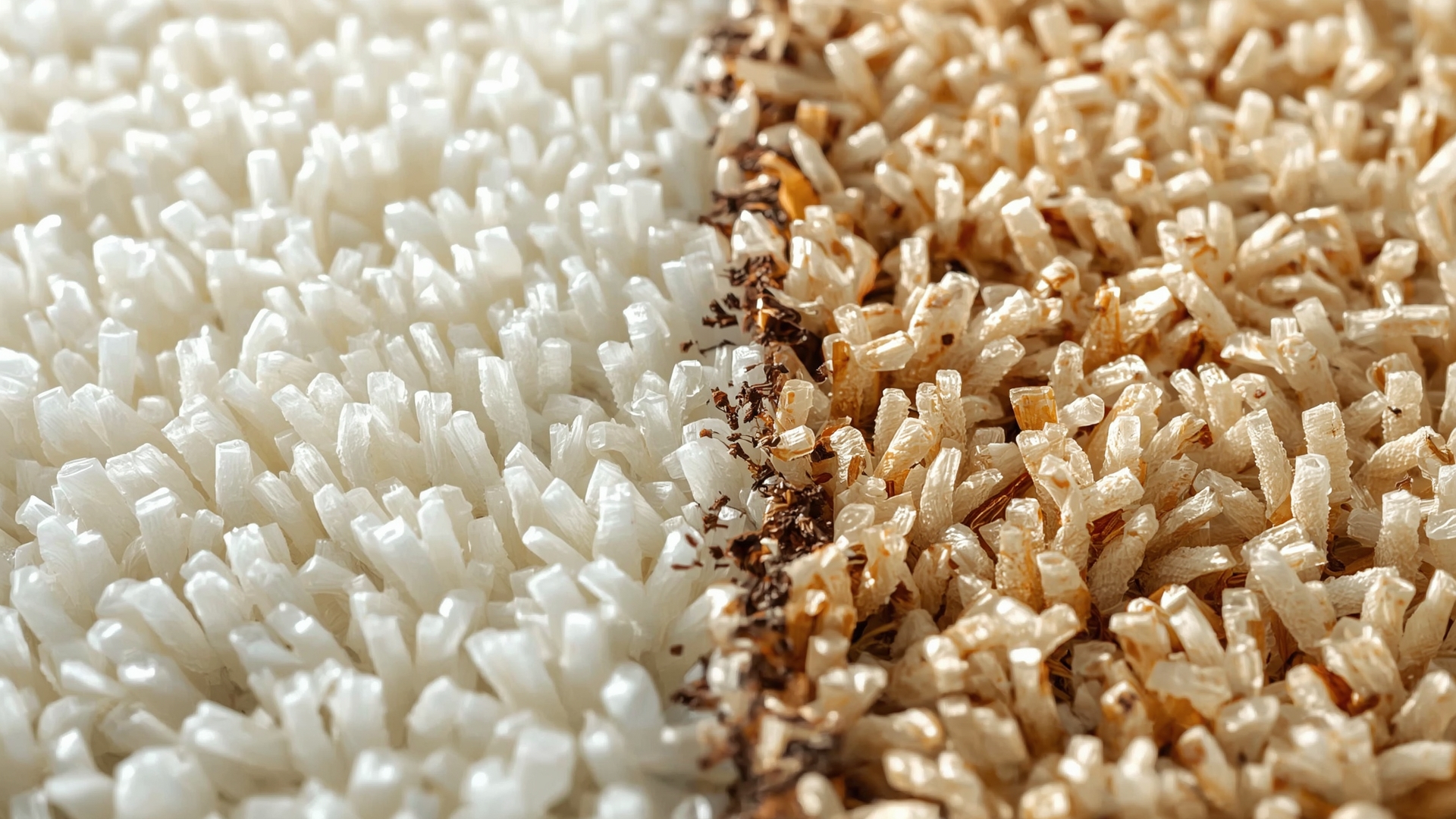
Resoiling happens when sticky residue left in carpet fibers acts like a magnet for new soil. Every footstep, every pet, every dust particle gets trapped. The carpet that looked clean starts to look permanently dirty. The good news is that resoiling is almost entirely preventable with the right chemistry, technique, and post-cleaning habits.
Key Takeaways
- Sticky residue is the root cause: Surfactant residue left after cleaning attracts soil and accelerates resoiling within days.
- pH matters after cleaning: Leaving carpet fibers in an alkaline state increases soil attraction. A proper acid rinse neutralizes residue and closes fiber scales.
- Extraction quality is critical: Under-extracted cleaning solution is the single biggest driver of post-cleaning resoil.
- Carpet protector extends cleanliness: A fluoropolymer protector applied after cleaning creates a barrier that repels oil and water-based soils.
- Routine maintenance between cleanings keeps the problem small: Consistent vacuuming and prompt spill response reduce the soil load that causes resoiling.
- Drying time affects resoiling risk: Carpet that stays wet longer picks up more soil before it stabilizes. Faster drying equals less resoil window.
What Causes Carpet Resoiling After Cleaning?

Quick Answer: Carpet resoiling happens when cleaning solution residue stays in the fibers after cleaning. That sticky residue attracts dust, oils, and foot traffic soil. The carpet re-dirties faster than before because the residue acts like glue for new soil particles.
Think of resoiling like leaving a thin layer of syrup on your kitchen floor. Even after it dries, your feet will pick up every crumb and piece of dust that touches it. Carpet fibers work the same way when residue is left behind.
There are two main types of resoiling drivers. The first is chemical resoiling, caused by surfactant residue — the soapy cleaning agents that weren’t fully rinsed out. The second is rapid resoiling, caused by oily soil (from foot traffic, cooking vapors, or pet oils) that coats fibers before they have a chance to dry.
A third factor is wicking, where soil and residue from deep in the carpet pad travel upward through the fibers as the carpet dries. While wicking is related to resoiling, it’s a slightly different mechanism driven by capillary action rather than surface residue alone.
The Role of Surfactant Chemistry in Resoil
Surfactants are cleaning agents that lift soil off fibers and suspend it in water for extraction. They work by lowering the surface tension of water. The problem is that surfactants don’t stop working just because you stopped cleaning. When they stay in the fiber, they keep attracting anything oily or dirty that comes into contact with the carpet.
High-residue surfactant formulas are the most common cause of accelerated resoiling. Some older or lower-quality carpet cleaning products leave behind a thick, sticky film. Modern low-residue and encapsulating chemistries are specifically designed to address this.
How pH Levels Affect Carpet Resoiling
Carpet fibers, especially nylon (the most common synthetic fiber), carry a slight negative charge. Alkaline cleaning solutions have a positive charge effect on the fiber surface, which attracts positively charged soil particles like a magnet. Leaving carpet in an alkaline state after cleaning creates a chemical invitation for new soil.
Rinsing with a slightly acidic solution (pH 4.5 to 6.0) neutralizes this effect. It closes the fiber scales on nylon and wool, reduces static charge, and removes alkaline residue that would otherwise continue attracting soil.
What Is the Difference Between Resoiling and Wicking?
Quick Answer: Resoiling is caused by residue left on fiber surfaces that attracts new soil from above. Wicking is different — it pulls existing deep soil upward through the fibers as the carpet dries. Both make carpet look dirty after cleaning, but they need different fixes.
Wicking shows up as spots or stains that reappear in the same location after cleaning. The stain looks gone when the carpet is wet, then comes back as it dries. This is because the soil is sitting below the carpet face, in the backing or pad. As water evaporates from the top down, it draws that soil upward.
Resoiling, by contrast, shows up as general darkening or dinginess across the entire carpet — especially in high-traffic areas. It doesn’t follow old stain patterns. It accumulates gradually over days and weeks, not hours.
Identifying which problem you have changes the fix. Wicking requires sub-surface extraction or retreating the affected zones. Resoiling requires better rinse chemistry, faster drying, and possibly a different cleaning product selection going forward.
How Does Cleaning Chemistry Selection Prevent Resoiling?
Quick Answer: Choosing low-residue or encapsulating carpet cleaning chemistries dramatically reduces resoiling risk. These products either leave behind almost no residue or crystallize residue into a dry, non-sticky form that vacuums out easily after the carpet dries.
Low-Residue Cleaning Solutions
Low-residue formulas use surfactants with a high rinsability rating. They are designed to release from fiber surfaces easily under extraction. Less residue left behind means less soil attraction after cleaning. Most professional hot water extraction formulas marketed for high-traffic or commercial use fall into this category.
Encapsulating Chemistry
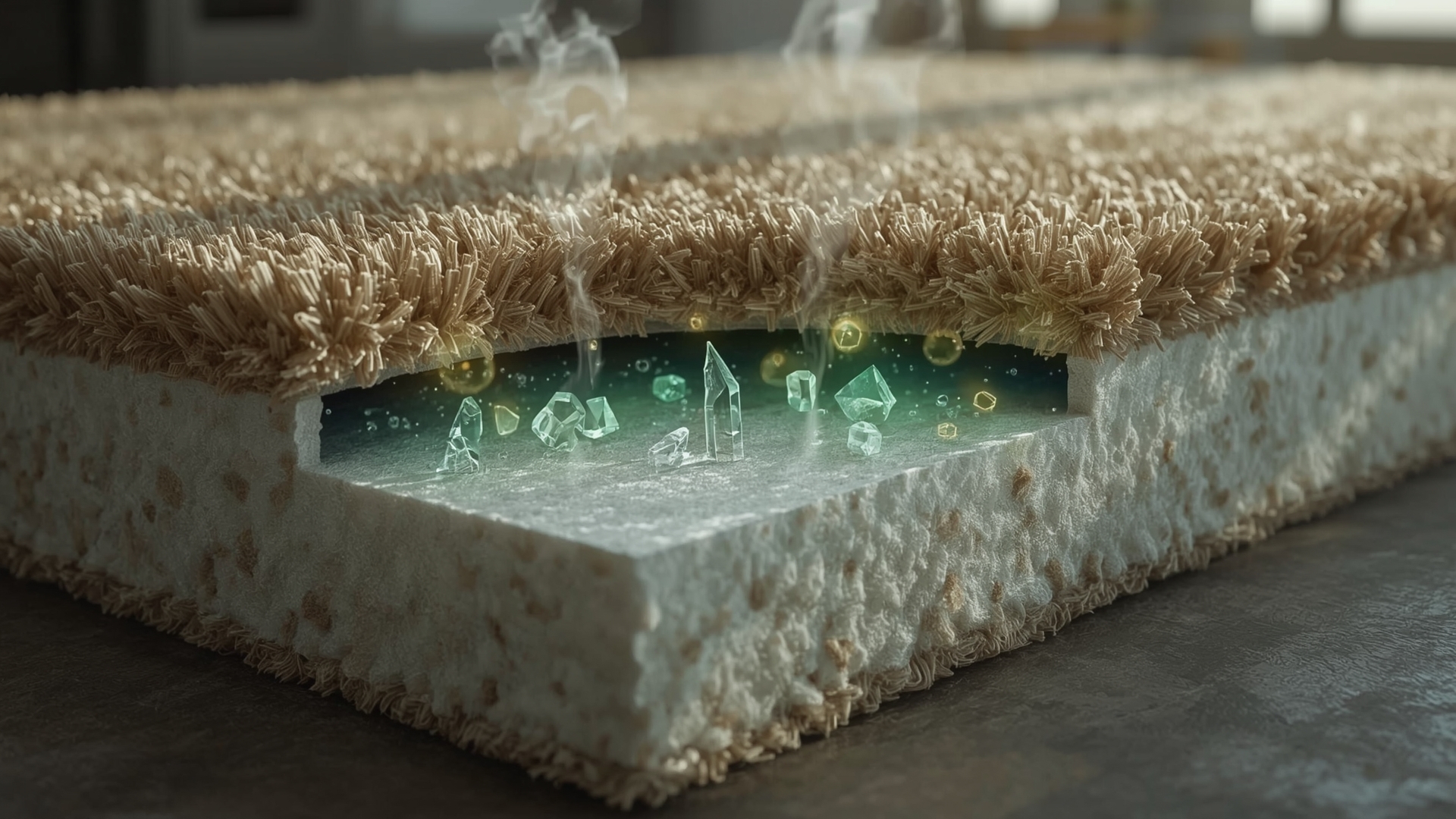
Encapsulation chemistry works differently. Instead of trying to fully rinse out the surfactant, the formula encapsulates (surrounds) soil particles in a polymer crystal as it dries. Once dry, these crystals don’t attract more soil. They release easily from the fiber and get removed with routine vacuuming.
Encapsulation is widely used in commercial interim cleaning because it dries fast, doesn’t over-wet the carpet, and dramatically reduces resoiling between full extractions.
Carpet Cleaning Chemistry Comparison (EAV Table)
| Chemistry Type | Residue Level | Resoil Risk | Dry Time | Best Use Case | pH Range |
|---|---|---|---|---|---|
| Standard Surfactant | High | High if under-rinsed | 4-8 hours | Light residential soil | 8.0-10.5 |
| Low-Residue Surfactant | Low | Low to moderate | 2-4 hours | High-traffic residential | 7.5-9.5 |
| Encapsulating Formula | Very Low (crystallizes) | Very Low | 30-60 minutes | Commercial interim cleaning | 8.0-9.5 |
| Acid Rinse Agent | None | Reduces alkaline resoil | N/A (rinse step) | Final rinse after extraction | 4.5-6.0 |
| Plant-Based Surfactant | Low to Moderate | Moderate | 2-5 hours | Green-certified cleaning programs | 7.0-9.0 |
Why Is Proper Rinsing the Most Important Step to Prevent Resoiling?
Quick Answer: Rinsing removes the surfactant residue that causes resoiling. A proper rinse pass uses clean water or a slightly acidic rinse agent (pH 4.5 to 6.0) after the cleaning solution. Without this step, sticky residue stays in the fiber and begins attracting soil immediately after drying.
Most carpet cleaning methods use a two-step process: apply cleaning solution, then extract. The problem is that extraction alone doesn’t remove all of the surfactant. Hot water extraction equipment passes the cleaning solution through the fiber, but a percentage of surfactant molecules bond loosely to the fiber and stay behind.
A dedicated rinse pass — using plain water or a pH-balanced rinse agent — flushes that residue out. This single step makes a measurable difference in how long the carpet stays clean after the service.
What a Proper Acid Rinse Does to Carpet Fibers
An acid rinse agent does three things at once. It neutralizes alkaline cleaning solution residue. It lowers the fiber’s surface charge, reducing soil attraction. And on nylon and wool fibers, it closes the cuticle-like scales on individual fiber strands, which makes the fiber smoother and less likely to trap soil particles.
Citric acid and white vinegar are sometimes used as DIY rinse agents. Professional acid rinse products use citric acid, buffered acetic acid, or proprietary acidic surfactant blends calibrated to reach the right pH range without over-acidifying the fiber.
Rinse Agent pH Reference (EAV Table)
| Rinse Agent Type | pH Range | Fiber Safe On | Resoil Reduction | Application Method | Dwell Time |
|---|---|---|---|---|---|
| Citric Acid Rinse | 4.5-5.5 | Nylon, Polyester, Wool | High | Pre-spray before final extract | 2-5 minutes |
| Buffered Acetic Acid Rinse | 5.0-6.0 | Nylon, Polyester | High | Tank-fed during extraction | Contact only |
| White Vinegar (5% Acetic Acid) | 2.5-3.0 | Synthetic only (not wool) | Moderate | Diluted spray, hand rinse | 2-3 minutes |
| Plain Water Rinse | 6.5-7.5 | All fiber types | Low to Moderate | Final extraction pass | N/A |
| Professional Acid Rinse Blend | 4.8-5.5 | Nylon, Polyester, Olefin | Very High | Pre-spray or tank-fed | 2-5 minutes |
How Does Extraction Quality Affect How Quickly Carpets Resoil?
Quick Answer: Poor extraction leaves more cleaning solution moisture in the carpet, which extends drying time and increases the window for soil to stick. Carpet that dries in under two hours resoils significantly slower than carpet left wet for six or more hours after cleaning.
Extraction quality depends on equipment power, technique, and the number of extraction passes made. Truck-mounted hot water extraction equipment generates stronger vacuum than portable machines, pulling more solution — and more residue — out of the fiber in each pass.
Technique matters just as much as equipment. Slow, overlapping extraction strokes remove more moisture than fast, single-pass work. Each additional dry extraction pass (using vacuum only, no water) after the cleaning pass removes measurably more residue and moisture.
Extraction Pass Impact on Residue and Dry Time (EAV Table)
| Extraction Method | Moisture Removed | Dry Time | Residue Left | Resoil Window | Equipment Type |
|---|---|---|---|---|---|
| Single pass (fast) | 50-60% | 8-12 hours | High | Long (6-10 hours) | Portable or truck mount |
| Double pass (slow overlap) | 70-80% | 4-6 hours | Moderate | Medium (3-5 hours) | Truck mount preferred |
| Double pass + dry extraction pass | 85-90% | 1-3 hours | Low | Short (1-2 hours) | Truck mount |
| Encapsulation (low-moisture) | Minimal water added | 30-60 minutes | Very Low (crystallized) | Minimal | Rotary or cylindrical brush |
What Role Does Carpet Protector Play in Preventing Resoiling?
Quick Answer: Carpet protector creates a thin fluoropolymer barrier around each fiber. This barrier repels oil and water-based soils before they bond to the fiber, making the carpet easier to maintain and significantly slower to resoil. Protector should be reapplied after every professional cleaning.
Most new carpets come from the factory with a stain-resist coating — either nylon’s built-in acid dye sites treated with a protector, or a topical fluoropolymer application. That coating wears down with traffic, cleaning chemicals, and time. After a professional cleaning, the fiber surface is more open and porous than it was before.
Applying a fresh protector treatment after cleaning restores that barrier. Soil that would otherwise bond directly to the fiber now sits on top of the protector, making it easier to vacuum out or clean in the future. It doesn’t make the carpet stain-proof, but it makes stains less likely to permanently bond and dramatically slows resoiling between cleanings.
Post-Cleaning Carpet Protector Application Best Practices
- Apply after the carpet is fully dry, not while still damp
- Use a low-pressure pump sprayer for even distribution across the fiber tips
- Apply in two light coats in perpendicular directions for full coverage
- Allow 2-4 hours cure time before foot traffic resumes
- Avoid walking on treated areas until the protector has fully dried
- Reapply every 12-18 months in residential settings, every 6-12 months in commercial settings
How Should You Maintain Carpet Between Cleanings to Prevent Resoiling?
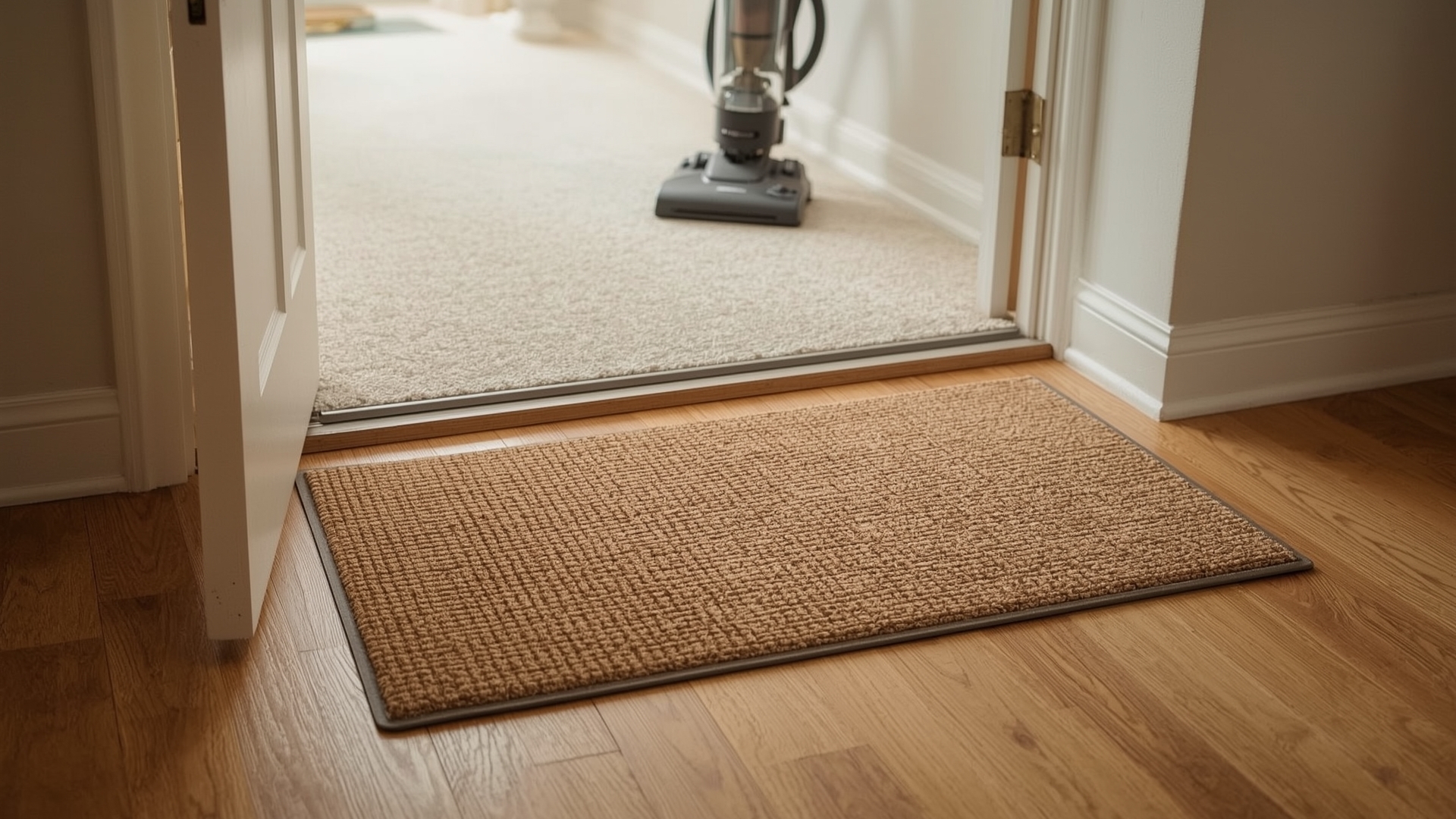
Quick Answer: Consistent vacuuming, prompt spill response, and soil-barrier strategies like door mats are the three most effective ways to prevent resoiling between professional cleanings. Removing dry soil before it bonds to the fiber is always easier than removing bonded soil later.
Vacuuming Frequency and Technique
Vacuuming is the most underutilized tool in carpet maintenance. Dry soil particles have sharp edges. Left in the carpet, they cut fiber strands as people walk over them, roughening the surface and creating more places for soil to catch. Removing that dry soil before it gets ground in is the simplest resoiling prevention strategy available.
In high-traffic areas, vacuum at least twice per week. In lower-traffic areas, once per week is adequate. Use slow, overlapping strokes and vacuum in two directions — with the pile and against it. A vacuum with strong suction and a beater bar lifts more embedded soil than suction-only models.
Managing Foot Traffic and Entry Soil
Studies from carpet manufacturers consistently show that 80% of the soil tracked into a building comes through entry points. Entry mats placed outside and inside every door intercept that soil before it reaches the carpet. A two-mat system — a scraper mat outside, an absorbent mat inside — captures the most soil.
Shoes carry oils, asphalt, and fine particles that bond aggressively to carpet fibers. A shoe-removal policy in residential settings or shoe mats in commercial settings can reduce tracked-in soil by 50-60% compared to no barrier system.
Prompt Spill Response to Prevent Oily Resoiling
Oily spills are the highest resoiling risk because oil bonds to fiber and then collects dry soil particles continuously. When a spill happens, blot — never rub — with a clean white cloth. Rubbing spreads the spill and pushes it deeper into the fiber.
After blotting, treat the area with a small amount of low-residue spot cleaner. Then rinse with plain water and blot dry again. Skipping the rinse step after spot cleaning is one of the most common causes of localized resoiling on spots and stains.
How Does Drying Time Impact Carpet Resoiling After Cleaning?
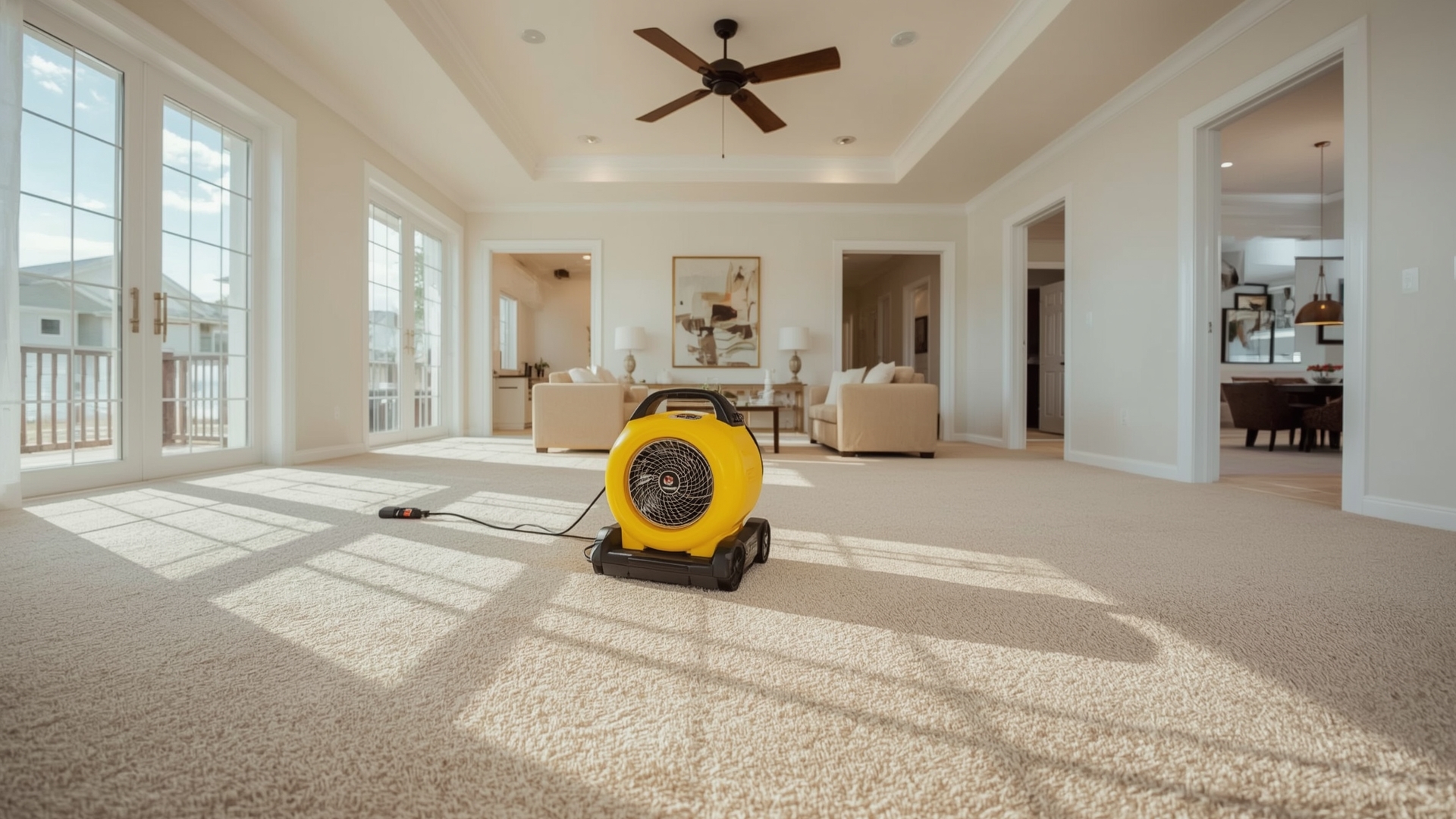
Quick Answer: The longer carpet stays wet after cleaning, the longer the resoiling window stays open. Wet fibers attract and hold airborne dust, pet dander, and foot traffic soil far more easily than dry fibers. Cutting dry time from eight hours to two hours measurably reduces how quickly the carpet resoils.
Carpet drying is a function of three variables: airflow, temperature, and humidity. You can control all three after a cleaning. Running fans or air movers across the carpet surface accelerates evaporation from the fiber tips. Raising room temperature by a few degrees and running a dehumidifier removes moisture from the air around the carpet, which speeds evaporation further.
Air circulation is the most controllable factor. A standard box fan aimed across the carpet significantly reduces dry time compared to leaving the room closed. Professional-grade air movers can reduce dry time from 8 hours to under 2 hours in typical conditions.
Drying Acceleration Strategies
- Air movers: Position at a 45-degree angle across the carpet surface, moving every 30-45 minutes
- Ceiling fans: Run on high in all cleaned rooms throughout the drying period
- HVAC system: Set to normal operating mode (not off) to maintain airflow and moderate temperature
- Dehumidifier: Most effective when room humidity is above 50%
- Open windows: Effective only when outdoor humidity is lower than indoor humidity
- Avoid carpet traffic: Foot traffic during drying compresses wet fibers and introduces new soil during the highest-risk window
What Are the Most Common Resoiling Mistakes Homeowners and Cleaners Make?
Quick Answer: The most common resoiling mistakes are using too much cleaning solution, skipping the rinse pass, resuming foot traffic before the carpet is fully dry, and failing to apply carpet protector after cleaning. Each mistake has a direct, measurable impact on how quickly the carpet resoils.
Over-Application of Cleaning Solution
More cleaning solution doesn’t mean cleaner carpet. Over-applying solution means more residue in the fiber regardless of how good the extraction is. Professional technicians measure solution concentration precisely. For DIY cleaning, always dilute to the manufacturer’s recommended ratio — never use concentrated solution.
Skipping the Final Rinse Pass
This is the most common professional error that leads to resoiling complaints. The rinse pass takes time and uses water, so it’s sometimes skipped in high-volume service situations. But the resoiling rate on carpets that received an acid rinse versus those that didn’t is dramatically different — cleaned areas without a rinse can begin showing resoil within one to two weeks.
Resuming Traffic Too Soon
Walking on carpet before it’s dry is a double resoil event. Shoe soles carry oil and soil that transfers directly to the wet fiber. And the physical pressure of foot traffic pushes moisture and residue deeper into the pile, making it harder to remove. Wait until carpet is completely dry to resume normal traffic.
Using High-Residue DIY Cleaning Products
Many consumer carpet cleaning products — including some popular rental machine formulas — are designed for immediate visual impact, not long-term cleanliness. They use high-foaming surfactants that look impressive but leave significant residue. After using these products, a final rinse pass with a pH-neutral or acidic rinse agent is critical.
What Should You Do Right After Professional Carpet Cleaning to Prevent Resoiling?
Quick Answer: Immediately after professional cleaning, start air movers or fans, keep foot traffic off the carpet until fully dry, and ask your cleaner about applying a post-cleaning protector. These three actions in the first two to four hours after cleaning have the biggest impact on long-term results.
Your Post-Cleaning Checklist
- Start fans or air movers immediately after the cleaner finishes
- Keep family and pets off cleaned areas until fully dry (minimum 2-4 hours, ideally longer)
- Place chair feet and furniture on foam blocks or plastic tabs until dry
- Confirm with your cleaner that a rinse pass and pH check were performed
- Request carpet protector application once carpet is completely dry
- Vacuum the carpet 24-48 hours after drying to remove encapsulated residue crystals (if encapsulation chemistry was used)
- Place clean entry mats at all traffic entry points before resuming normal use
Carpet Fiber Resoiling Risk by Type (EAV Table)
| Fiber Type | Resoil Susceptibility | Oil Attraction | Ideal Post-Clean pH | Protector Compatibility | Vacuum Frequency |
|---|---|---|---|---|---|
| Nylon (Type 6 / 6,6) | Moderate | Low to Moderate | 4.5-5.5 | Excellent | 2x per week (high traffic) |
| Olefin (Polypropylene) | High | Very High (oleophilic) | 5.0-6.5 | Moderate | 3x per week (high traffic) |
| Polyester (PET) | Moderate to High | Moderate | 5.0-6.5 | Good | 2x per week (high traffic) |
| Wool | Low | Low | 4.5-5.5 | Good (wool-safe only) | 2x per week (high traffic) |
| Triexta (SmartStrand) | Low to Moderate | Low (built-in stain resist) | 5.0-6.5 | Manufacturer varies | 1-2x per week |
Does the Type of Soil Affect How Carpets Resoil After Cleaning?
Quick Answer: Yes. Oily soils cause the fastest resoiling because oil bonds chemically to carpet fiber and acts as a sticky base for dry soil particles. Dry soils like dirt and sand cause abrasive wear but don’t create the same chemical bond. Oil-based resoiling is harder to reverse once it accumulates.
Foot traffic deposits a thin layer of body oils, shoe oils, and asphalt compounds onto carpet fibers over time. This oil layer is what makes heavily trafficked areas look darker and grayer compared to the rest of the carpet. It’s also why Olefin (polypropylene) fiber — which is oleophilic (oil-attracting by nature) — resoils faster than nylon in similar conditions.
Cooking oils, pet grooming oils, and residual sunscreen or lotion from bare feet are other major oil-based resoiling contributors. In homes with pets, a combination of pet oils and dander creates a particularly aggressive resoiling environment that benefits most from a post-cleaning protector application.
How Can You Tell If Your Carpet Is Resoiling Due to Residue or Normal Wear?
Quick Answer: Residue-driven resoiling shows up within days to weeks of cleaning, darkens evenly across high-traffic paths, and feels slightly tacky underfoot. Normal wear-related soiling develops slowly over months and affects primarily the highest foot-traffic areas without the sticky feel.
The tactile test is the most reliable field check. Run a white cloth lightly over the carpet surface 48-72 hours after cleaning. If the cloth picks up a dark oily or brown residue, sticky deposits remain in the fiber. If the cloth picks up only light dust, the fiber is clean and any future soiling will be from new traffic soil, not residue.
Another indicator is the smell test. Residue-heavy carpets sometimes have a faint chemical odor after drying — a sign that surfactant molecules are still active on the fiber surface. A properly rinsed, residue-free carpet should have essentially no odor after drying.
Frequently Asked Questions
Why does my carpet look dirtier after cleaning than before?
This is almost always caused by surfactant residue left in the fiber. The residue acts like a soil magnet and attracts new dirt faster than the original carpet surface did. It can also be caused by wicking, where old deep soil travels up through the fiber as it dries. A proper rinse pass and faster drying resolve most cases.
How long should I stay off carpet after professional cleaning?
Stay off the carpet until it is completely dry. This typically takes two to six hours with air movers, or up to 12 hours without assisted drying. Walking on wet carpet transfers foot soil directly to the open, vulnerable fiber surface — this is one of the most direct causes of immediate resoiling.
Can I use vinegar to rinse carpet after cleaning?
Diluted white vinegar (1 part vinegar to 10 parts water) can work as a DIY rinse agent on synthetic carpets like nylon and polyester. Never use vinegar on wool or natural fiber carpets — its pH of 2.5-3.0 is too acidic and can damage the fiber. A professional acid rinse product is a safer and more controlled option.
What is olefin carpet and why does it resoil so fast?
Olefin, also called polypropylene, is a synthetic carpet fiber used in many budget and commercial carpets. It is oleophilic, meaning it chemically attracts oils. Every footstep deposits trace oils onto the fiber. Olefin carpet resoils faster than nylon because of this oil attraction, and it benefits the most from regular vacuuming and consistent use of carpet protector.
How often should carpet protector be reapplied to prevent resoiling?
In residential settings, reapply carpet protector every 12 to 18 months — ideally after every professional cleaning. In commercial settings with heavy foot traffic, reapplication every 6 to 12 months is more appropriate. The protector wears down with traffic and cleaning cycles, so reapplication restores the barrier that slows resoiling.
Does vacuuming before professional cleaning help prevent resoiling?
Yes. Removing dry soil before cleaning means the cleaning solution can focus on bonded soil and residue rather than mixing with loose debris. When dry soil mixes with cleaning solution during extraction, it can create a thick slurry that is harder to fully remove — increasing the residue load left behind and raising the resoiling risk.