Not every carpet cleaner is the same. Some have years of hands-on training backed by a recognized industry credential. Others learned on the job with no formal standards guiding their work. The difference between those two technicians can mean the difference between a carpet that lasts 10 more years and one that gets damaged during a single cleaning visit.
IICRC certification is the most widely recognized professional credential in the carpet cleaning industry. It tells you that a technician has passed standardized training covering fiber science, cleaning chemistry, and proper extraction methods. This guide explains what that certification covers, which credentials matter most, and why it directly lowers your risk as a property owner.
Key Takeaways
- IICRC stands for Institute of Inspection, Cleaning and Restoration Certification — the leading standards body for the cleaning and restoration industry.
- The most relevant certification for carpet cleaning is CCT (Carpet Cleaning Technician), though advanced and specialty credentials also exist.
- Certified firms must employ at least one certified technician and follow a code of ethics as a condition of their listing.
- Certification reduces risk by ensuring technicians understand fiber types, pH chemistry, and moisture control before touching your carpet.
- Not all certifications are equal — some cover water damage, some cover odor control, and some are specific to upholstery or hard surfaces.
- You can verify any technician’s certification directly on the IICRC website using their name or firm name.
What Is the IICRC and Why Does It Set the Standard?
Quick Answer: The IICRC (Institute of Inspection, Cleaning and Restoration Certification) is a nonprofit standards body founded in 1972. It develops training curricula, written standards, and certification exams for cleaning and restoration professionals across the United States and internationally.
The IICRC is not a government agency. It’s an ANSI-accredited standards development organization. ANSI stands for American National Standards Institute, which means the IICRC’s published standards have gone through a formal peer-review process recognized across industries.
The organization publishes reference documents like the S100 (Standard for Professional Carpet Cleaning) and the S500 (Standard for Professional Water Damage Restoration). These documents define accepted methods, drying targets, moisture thresholds, and chemical application guidelines. Certified technicians are trained against these standards.
When a firm advertises as “IICRC Certified,” it means at least one employee holds an active certification and the business has agreed to the IICRC’s code of ethics. That code includes commitments around honest pricing, professional conduct, and proper technique.
How Does the IICRC Develop Its Standards?
The IICRC convenes technical advisory committees made up of industry professionals, scientists, and manufacturers. These groups review field data, material science research, and chemical safety guidelines to update standards on a regular cycle. The S100, for example, covers soil types, fiber categories, cleaning agents, and moisture limits for residential carpet cleaning.
Which IICRC Certifications Apply to Carpet Cleaning?
Quick Answer: The core carpet cleaning credential is the CCT (Carpet Cleaning Technician). Advanced options include the ASD (Applied Structural Drying) and OCT (Odor Control Technician). Each requires passing a written exam after completing an approved course.
The IICRC offers more than 20 individual certifications. Not all of them apply to carpet work. Here are the credentials most relevant to carpet cleaning technicians.
| Certification | Abbreviation | Focus Area | Exam Format | Renewal Period |
|---|---|---|---|---|
| Carpet Cleaning Technician | CCT | Fiber types, cleaning chemistry, extraction methods | Written exam, in-person or online | 3 years |
| Senior Carpet Inspector | SCI | Carpet failure analysis, fiber identification, claim documentation | Written exam + field experience requirement | 3 years |
| Odor Control Technician | OCT | Odor chemistry, deodorization methods, source removal | Written exam | 3 years |
| Applied Structural Drying | ASD | Moisture measurement, drying equipment, evaporation science | Written exam + hands-on component | 3 years |
| Water Damage Restoration Technician | WRT | Water damage classification, extraction, structural drying | Written exam | 3 years |
| Upholstery and Fabric Cleaning Technician | UFT | Fabric codes, upholstery fiber chemistry, spot removal | Written exam | 3 years |
What Does the CCT Exam Actually Cover?
The CCT curriculum covers five main topic areas. These are carpet fiber identification, soil classification, pre-inspection procedures, cleaning methods (hot water extraction, encapsulation, bonnet cleaning, dry compound), and post-cleaning quality checks. Technicians learn to identify fiber types like nylon, polyester, wool, and olefin before selecting a cleaning method. Choosing the wrong chemistry for a fiber type is one of the most common causes of carpet damage.
What Is the Difference Between a Certified Technician and a Certified Firm?
A certified technician is an individual who has passed an IICRC exam. A certified firm is a business that employs at least one certified technician and has registered with the IICRC. The firm certification does not mean every person on a crew is individually certified. When you hire a company, ask specifically whether the technician coming to your home holds an active individual credential.
What Knowledge Does IICRC Training Give a Carpet Cleaning Technician?
Quick Answer: IICRC training teaches technicians fiber science, cleaning agent pH ranges, moisture limits, soil types, and pre-inspection protocols. This knowledge prevents common mistakes like over-wetting, chemical damage to delicate fibers, and leaving residue that attracts more soil.
The gap between a trained technician and an untrained one shows up in the details. Here are the specific knowledge areas where IICRC training makes a measurable difference.
Fiber Identification and Chemistry Compatibility
Different carpet fibers react very differently to cleaning agents. Wool, for example, is protein-based and can be permanently damaged by high-pH alkaline cleaners or high heat. Nylon is more durable but can lose its static resistance if treated with the wrong chemistry. Olefin (polypropylene) has low dye affinity, meaning certain spotting agents can strip color from it entirely.
A CCT-trained technician identifies the fiber type before selecting any chemical. They know which pH range is safe for each fiber and which drying temperatures are acceptable. That step alone prevents a large percentage of carpet damage claims.
| Fiber Type | Safe pH Range | Max Cleaning Temp | Primary Risk Without Training | Common Carpet Use |
|---|---|---|---|---|
| Nylon (Type 6 / 6,6) | 5.0 – 8.5 | 150°F | Dye bleeding, residue buildup | Residential, commercial |
| Polyester (PET) | 5.0 – 8.0 | 140°F | Pile distortion from heat | Residential mid-grade |
| Olefin (Polypropylene) | 5.0 – 8.0 | 120°F | Color stripping, heat damage | Berber, commercial loop |
| Wool | 4.5 – 7.5 | 100°F | Felting, browning, fiber breakdown | High-end residential, area rugs |
| Triexta (PTT) | 5.0 – 9.0 | 140°F | Over-wetting, pad saturation | Residential (Mohawk SmartStrand) |
Soil Classification and Method Selection
IICRC training classifies soils into four categories: dry particulate, water-soluble, oil-based, and combination soils. Each requires a different approach. Dry particulate soil (like tracked-in dirt) releases best with vacuuming and agitation. Oil-based soils need a solvent-based or emulsifying agent. Water-soluble soils respond to hot water extraction.
A trained technician matches the cleaning method to the soil type. An untrained one often defaults to a single method regardless of what they’re dealing with. That mismatch leads to soils being redeposited or driven deeper into the pile.
Moisture Control and Drying Standards
Over-wetting is one of the most damaging mistakes in carpet cleaning. When too much water saturates a carpet, it wicks into the backing and pad. This creates conditions for mold growth within 24 to 48 hours and causes a phenomenon called wicking, where deep soils travel back up the fiber to the surface after the carpet dries.
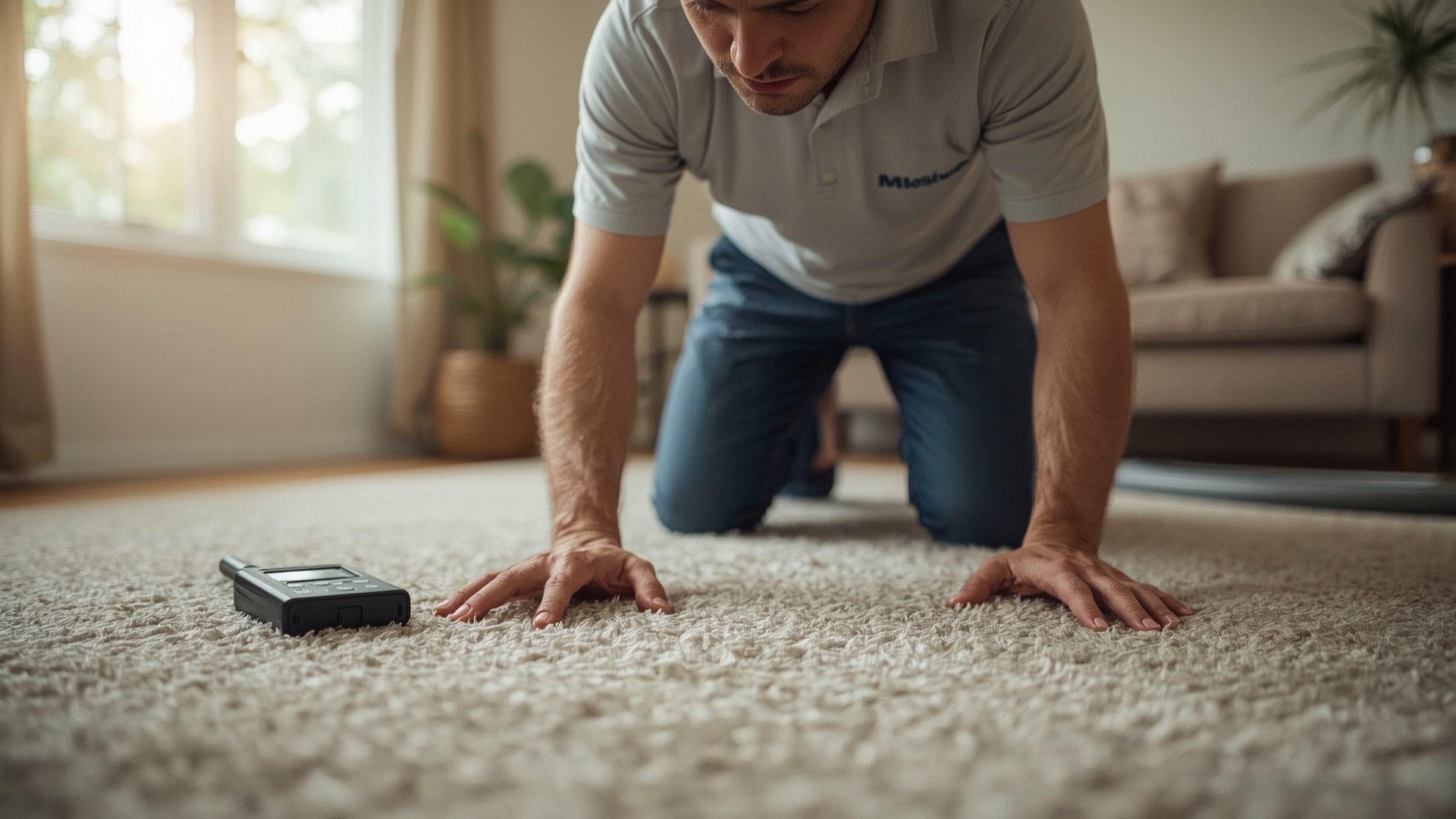
IICRC standards specify moisture reading targets technicians must hit before leaving a job. They also define airflow requirements and dehumidification guidelines. Trained technicians carry moisture meters and use them before and after cleaning to verify the carpet is within safe moisture limits.
Why Does Hiring a Certified Technician Reduce Risk?
Quick Answer: Certified technicians reduce risk in three ways: they prevent fiber and dye damage through correct chemical selection, they minimize moisture-related issues through proper extraction and drying protocols, and they follow a code of ethics that creates accountability if something goes wrong.
The risk of hiring an uncertified technician is not hypothetical. Carpet damage from improper cleaning is one of the most common home service complaints. The damage often falls into predictable categories.
What Are the Most Common Carpet Cleaning Mistakes Made by Uncertified Technicians?
- Over-wetting: Leaving too much moisture in the carpet, leading to mold, odor, and wicking
- Wrong pH chemicals: Using alkaline cleaners on wool or acid-sensitive fibers
- Inadequate pre-inspection: Skipping fiber identification, leading to mismatched chemistry
- Residue buildup: Not rinsing cleaning agents fully, causing rapid resoiling
- Excessive heat: Using steam temperatures above the fiber’s safe threshold, distorting pile or melting backings
- Aggressive agitation: Using rotary tools on looped or cut-pile carpets in ways that distort or fray fibers
Each of these mistakes corresponds directly to a knowledge gap that IICRC training addresses. The CCT curriculum teaches technicians exactly what goes wrong in each scenario and how to prevent it.
How Does IICRC Certification Create Accountability?
When a certified technician causes damage, there is a formal recourse path. The IICRC maintains a consumer complaint process. A certified firm can lose its listing if it fails to resolve legitimate complaints. This creates a real incentive for certified professionals to do the job correctly.
An uncertified technician who damages your carpet has no governing body holding them accountable beyond civil action. Certification adds a professional accountability layer that is entirely absent without it.
How Do You Verify That a Carpet Cleaner Is IICRC Certified?
Quick Answer: Visit iicrc.org and use the “Find a Professional” tool. Search by firm name, technician name, or ZIP code. The database shows active certifications, credential type, and expiration dates. A verbal claim alone is not sufficient verification.
Verification takes less than two minutes and removes all guesswork. Here is the exact process.
- Go to the IICRC website at iicrc.org
- Click “Find a Professional” in the main navigation
- Enter the company name, technician name, or your ZIP code
- Review the results — each listing shows which certifications are active and when they expire
- If a company claims certification but does not appear in the database, ask them to produce a physical certificate before the job begins
Certifications renew every three years. An expired certification means the technician has not completed continuing education since that date. Standards change. An expired credential does not guarantee the technician is current on updated methods or chemical guidelines.
What Questions Should You Ask Before Hiring?
- Which IICRC certifications does the technician coming to my home hold?
- Is your firm listed on the IICRC directory?
- What method do you use for my fiber type, and why?
- What moisture readings do you take after cleaning to confirm proper drying?
- What is your process if the carpet is damaged during cleaning?
A confident, knowledgeable answer to these questions is itself a signal of training. A technician who hesitates or cannot explain their method selection is likely not operating from a formalized knowledge base.
How Does IICRC Certification Compare to Other Industry Credentials?
Quick Answer: The IICRC CCT is the most widely recognized carpet cleaning credential in North America. The NCCA (National Carpet Cleaners Association) operates primarily in the UK. Manufacturer certifications like those from Bissell or Prochem are product-specific, not method-based, and are not equivalent to IICRC credentials.
| Credential | Issuing Body | Geographic Scope | Standards Basis | Consumer Recourse |
|---|---|---|---|---|
| CCT (Carpet Cleaning Technician) | IICRC | North America, international | ANSI-accredited S100 standard | Formal complaint process |
| NCCA Membership Certification | National Carpet Cleaners Association | United Kingdom | NCCA technical guidelines | NCCA complaint process |
| Manufacturer Training Certificates | Equipment/chemical manufacturers | Product-specific | Brand guidelines only | None beyond warranty |
| State Contractor License | State licensing boards | State-specific | Business operation, not technique | State complaint process |
State contractor licenses regulate business operations — they confirm a company is legally registered, insured, and bonded. They do not verify technical competency. A company can be fully licensed and legally compliant without any technician on staff having completed formal carpet cleaning training.
What Should You Expect from an IICRC-Certified Carpet Cleaning Visit?
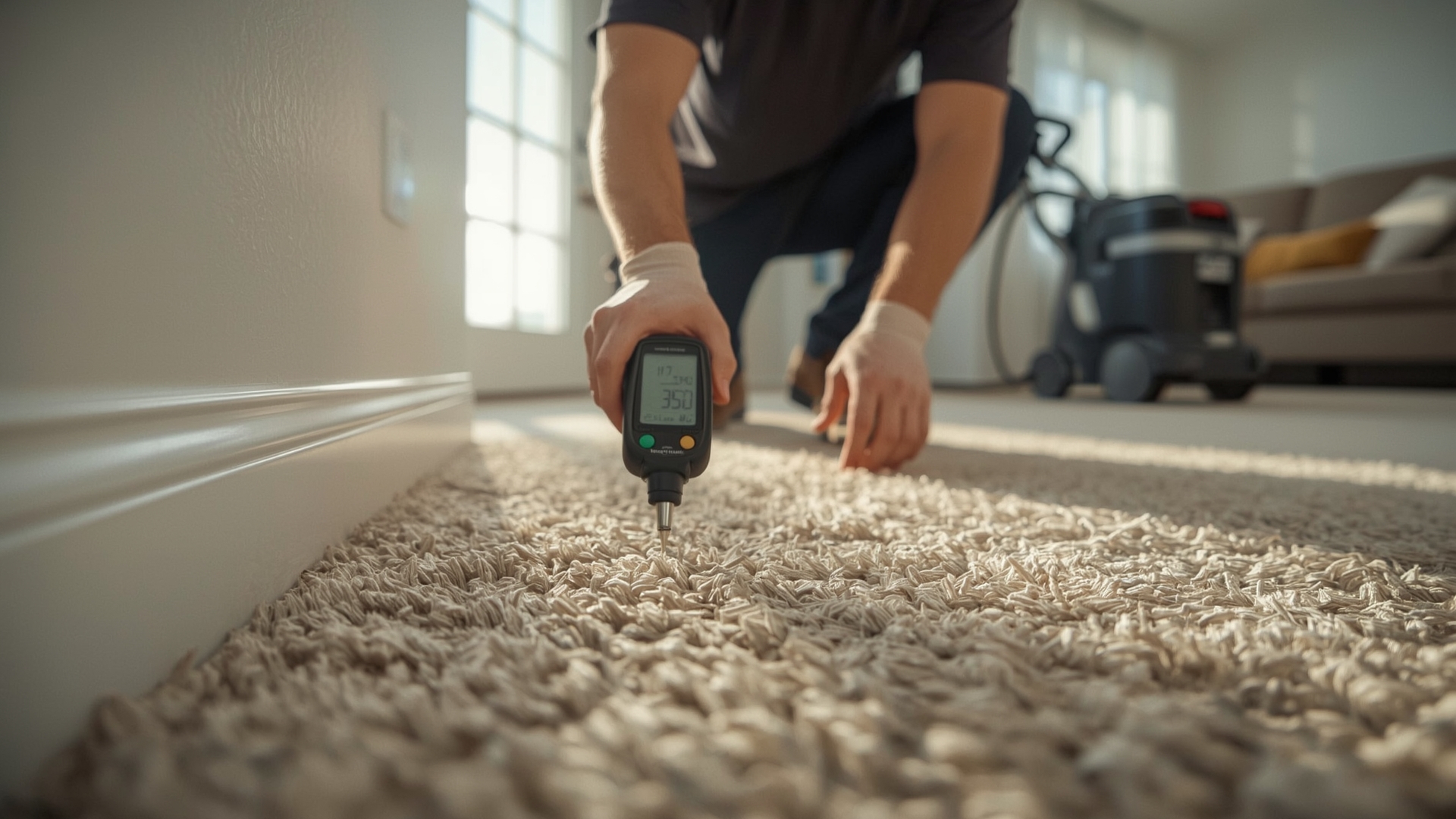
Quick Answer: A certified technician will inspect the carpet before cleaning, identify fiber type and soil conditions, explain their method, take moisture readings after cleaning, and provide drying guidance. The visit follows a defined pre-inspection, cleaning, and post-inspection sequence.
Knowing what a professional visit looks like helps you recognize when something is being skipped. Here is the standard sequence a CCT-certified technician follows.
Pre-Cleaning Inspection
Before any equipment touches your carpet, a trained technician walks the space. They identify the fiber type (often using a burn test or manufacturer label), assess soil load and distribution, note any existing damage or spots that require pre-treatment, and check for moisture issues that might indicate underlying pad problems.
This inspection takes five to fifteen minutes. Skipping it is a red flag. Pre-inspection findings determine which cleaning agent, water temperature, and extraction pressure are appropriate for that specific carpet.
Method Selection and Pre-Treatment
Based on the inspection, the technician selects a primary cleaning method. Hot water extraction (sometimes called steam cleaning) is the most common for residential carpet. For commercial loop pile or delicate fibers, encapsulation or low-moisture methods may be more appropriate.
Pre-treatment solutions are applied to high-traffic areas and spots to break down soil before extraction. Dwell time — the amount of time the solution sits before agitation — matters. Rushing this step means the chemistry does not fully work, and more passes with the extraction tool are needed, increasing moisture load.
Post-Cleaning Verification
After extraction, a trained technician takes moisture readings using a pin or non-invasive moisture meter. They confirm that carpet and pad moisture levels are within acceptable ranges before leaving. They also set up airflow if needed — opening windows, leaving fans, or recommending a dehumidifier for rooms with limited ventilation.
They provide a realistic drying time estimate based on conditions. For hot water extraction in a well-ventilated room with low humidity, that is typically two to six hours. In basements or humid climates, it can extend to 12 to 24 hours.
Does IICRC Certification Affect Carpet Warranty Coverage?
Quick Answer: Yes. Many carpet manufacturers require cleaning by an IICRC-certified technician using the manufacturer’s recommended method to maintain warranty coverage. Using an uncertified cleaner or an unapproved method can void the carpet’s warranty entirely.
Major carpet manufacturers including Shaw, Mohawk, and Interface specify warranty maintenance requirements in their product documentation. Shaw’s residential warranty, for example, requires professional hot water extraction cleaning on a defined schedule. Some warranties specify that the cleaning must be performed by an IICRC-certified firm.
If your carpet develops a defect — fiber delamination, tuft loss, color fading — the manufacturer will review your cleaning history during the warranty claim process. If you cannot document that cleaning was performed by a qualified technician using an approved method, the claim can be denied. Keeping invoices from certified cleaners is a simple way to protect this documentation trail.
How Often Do Manufacturers Require Professional Cleaning to Maintain Warranty?
Most residential carpet warranties require professional cleaning every 12 to 18 months. Commercial warranties often specify more frequent cleaning based on traffic classification. The exact requirement is in the warranty documentation that comes with your carpet at installation. If you no longer have that document, the manufacturer’s website typically publishes warranty terms by product line.
| Manufacturer | Required Method | Frequency | Certification Requirement | Documentation Needed |
|---|---|---|---|---|
| Shaw Floors | Hot water extraction | Every 18 months | Certified professional recommended | Cleaning receipt with date |
| Mohawk Flooring | Hot water extraction | Every 12–18 months | Professional cleaner required | Cleaning receipt with date |
| Interface (Commercial) | Encapsulation or HWE | Per maintenance schedule | Trained technician recommended | Maintenance log |
| Stainmaster (Invista) | Hot water extraction | Every 12 months | Professional cleaning required | Cleaning invoice |
Is IICRC Certification Worth the Premium Cost?
Quick Answer: Yes. Certified technicians typically charge $0.25 to $0.50 more per square foot than uncertified operators. That premium is smaller than the cost of a single damaged carpet section, a denied warranty claim, or mold remediation from over-wetting.
Cost comparisons look different when you factor in failure scenarios. A standard room carpet cleaning by a certified technician runs $100 to $200 for an average-sized room. Replacing that carpet costs $800 to $2,500 for a single room depending on fiber quality and installation. Mold remediation after carpet over-wetting starts at $500 and can exceed $3,000 if structural materials are affected.
The premium for certification is not a luxury cost. It is a risk management decision. The higher the value of your carpet — especially wool, hand-knotted, or commercial-grade — the more that decision matters.
Frequently Asked Questions
Can a carpet cleaner fake IICRC certification?
They can claim it verbally, but they cannot fake the IICRC’s online directory. Any active certification is publicly listed at iicrc.org. If a company’s name does not appear or the technician’s credential is expired, the claim is unverified. Always check the directory before hiring.
Does every technician on a certified firm’s crew need to be individually certified?
No. A certified firm only requires at least one certified employee to maintain its IICRC listing. Other crew members may not hold individual credentials. If this matters to you, ask the company to confirm the technician assigned to your job holds an active CCT or equivalent certification.
What is the IICRC S100 standard and does it apply to my cleaning job?
The IICRC S100 is the Standard and Reference Guide for Professional Carpet Cleaning. It defines accepted methods, chemical limits, drying targets, and pre-inspection requirements for professional carpet cleaning. Any IICRC-certified technician working on residential or commercial carpet should be operating within its guidelines.
Do IICRC certifications cover area rug cleaning?
The CCT certification covers general carpet cleaning principles that apply to many area rugs. However, the IICRC also offers a separate credential — the Oriental and Specialty Rug Cleaning Technician (ORT) — for hand-knotted, antique, and natural-fiber rugs. These pieces often require plant-based dye testing, hand washing, and controlled drying that differ from standard carpet cleaning.
Can I lose my carpet warranty if I clean it myself with a rental machine?
Possibly. Most major manufacturer warranties require professional cleaning using specified methods. Rental machines are not classified as professional equipment and may not meet the heat, pressure, or water recovery standards required. Check your warranty terms before using a consumer rental unit on warranted carpet.
How long does it take to become an IICRC-certified carpet cleaning technician?
The CCT certification requires completing an approved training course, which typically runs one to two days, followed by a written exam. Some providers offer in-person and online course formats. The exam covers the S100 standard content. Once passed, the credential is active for three years before renewal is required.