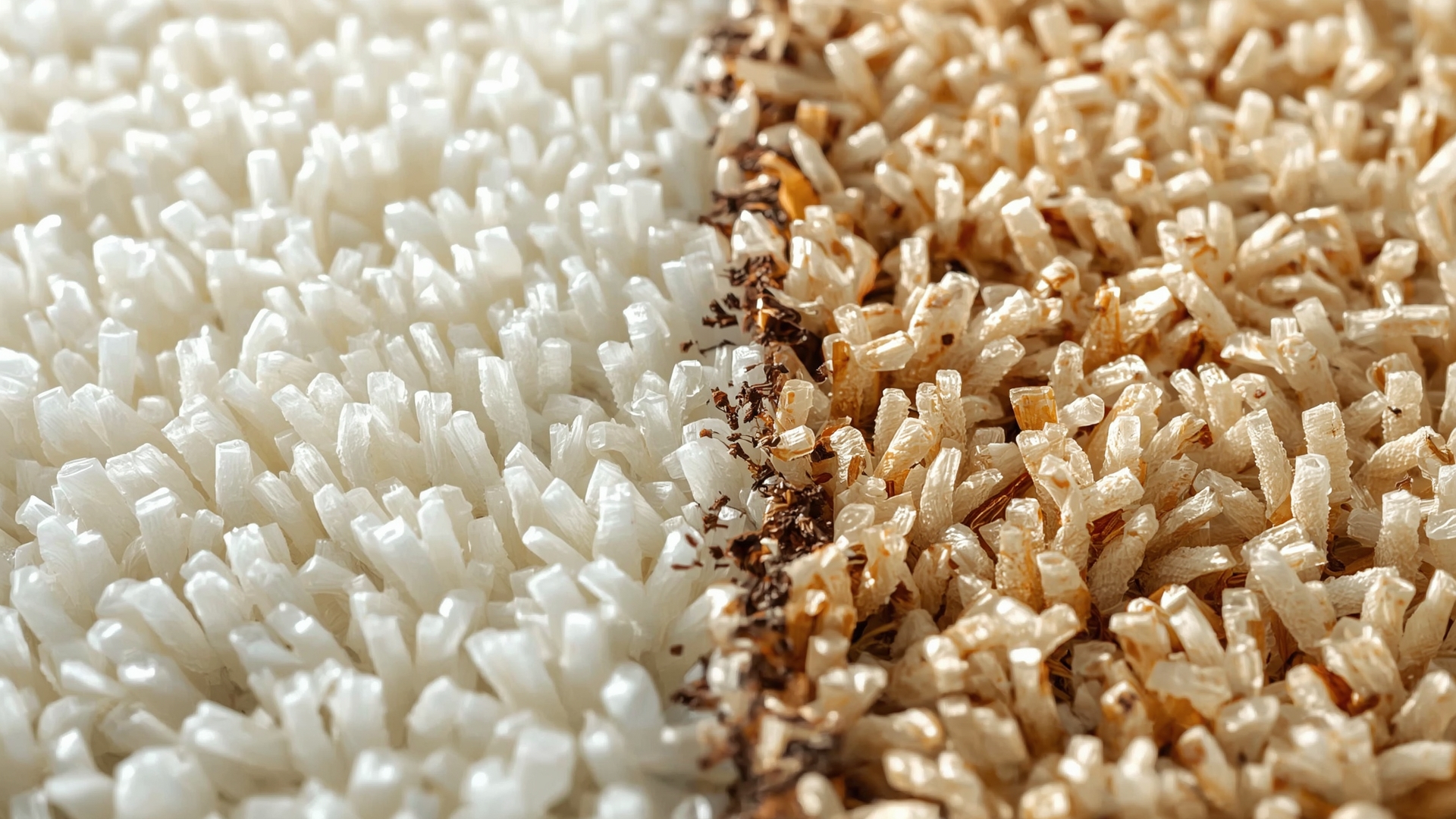
Enzyme cleaners are only as good as the time you give them to work. When you spray an enzyme product on carpet and let it dry in 10 minutes, the biological reaction barely gets started. The enzymes need sustained contact with the target molecules — pet urine salts, uric acid crystals, organic stains — to fully break them down. That contact time is called dwell time.
Most enzyme products need 20 to 45 minutes of active dwell time to be effective. In a dry home with warm ambient air, that solution can evaporate in under 15 minutes. The result is a partial reaction that removes surface odor but leaves the underlying chemistry intact. The smell comes back within days.
The good news is that extending dwell time does not require professional equipment. A few low-cost household materials — plastic sheeting, weighted towels, and basic temperature adjustments — can double or triple your enzyme’s active contact window.
Key Takeaways
- Dwell time is the most overlooked factor in DIY enzyme cleaning. Evaporation cuts it short before the reaction finishes.
- Plastic sheeting traps moisture against the carpet surface and is the single most effective dwell time extender available at home.
- Weighted towels slow evaporation and push the enzyme solution deeper into the carpet pile and pad.
- Temperature matters: enzymes are most active between 60°F and 85°F. Too cold slows the reaction. Too hot kills the enzymes.
- Humidity above 50% helps prevent surface evaporation and keeps the enzyme solution active longer.
- Pre-wetting the carpet before applying enzyme solution prevents dry fibers from absorbing the product too quickly and neutralizing it on contact.
- Thick or multi-layer contamination requires repeated enzyme applications with proper dwell time, not a single heavy soak.
What Is Enzyme Dwell Time and Why Does It Matter for Carpet Cleaning?
Quick Answer: Enzyme dwell time is the period an enzyme cleaner stays wet and active on carpet. Most products need 20 to 45 minutes of contact to fully break down organic compounds like uric acid and pet proteins. Cutting that time short means incomplete odor removal.
Enzyme cleaners contain biological catalysts — proteins that speed up chemical reactions without being consumed. When an enzyme molecule contacts a target compound like uric acid, it binds to it and converts it into simpler, odorless byproducts. That process takes time.
The challenge is that the solution must stay wet for the reaction to continue. Once the liquid evaporates, the enzymes become inactive. They do not restart when moisture returns later. The reaction simply stops where it left off.
This is why the same carpet can smell fine for a week after treatment and then develop a strong odor on a humid day. The enzymes dried out before fully converting all the uric acid. The remaining crystals reactivate with ambient humidity and release odor again.
How Long Do Enzyme Cleaners Actually Need to Work?
Most enzyme carpet products specify a dwell time between 15 and 60 minutes on their label. That range reflects different formulations and contamination levels. Light stains on surface fibers may respond in 20 minutes. Deep contamination that has reached the carpet pad may need 45 to 60 minutes of sustained wet contact.
The label time assumes ideal conditions: moderate temperature, moderate humidity, and no rapid evaporation. In a typical home — especially one with forced-air heating or air conditioning running — the actual wet window is much shorter than the label suggests.
Why Does Enzyme Solution Dry Out Too Fast on Carpet?
Quick Answer: Carpet fibers absorb enzyme solution quickly, and airflow plus warm temperatures cause rapid surface evaporation. Forced-air HVAC systems, low indoor humidity, and direct sunlight can reduce active wet time from 45 minutes down to 10 minutes or less.
Carpet is essentially a sponge with a large surface area. When you apply enzyme solution, it wicks into the fiber structure almost immediately. The top layer of fibers dries first because it is most exposed to air. The enzymes in those fibers stop working while the contamination below the surface may still be untouched.
Several common household conditions accelerate this drying:
- HVAC systems pushing dry air across the floor
- Indoor humidity below 30%
- Room temperatures above 85°F
- Direct sunlight on the treatment area
- Thin enzyme application that soaks in but does not saturate
What Role Does Carpet Pile Height Play in Evaporation Rate?
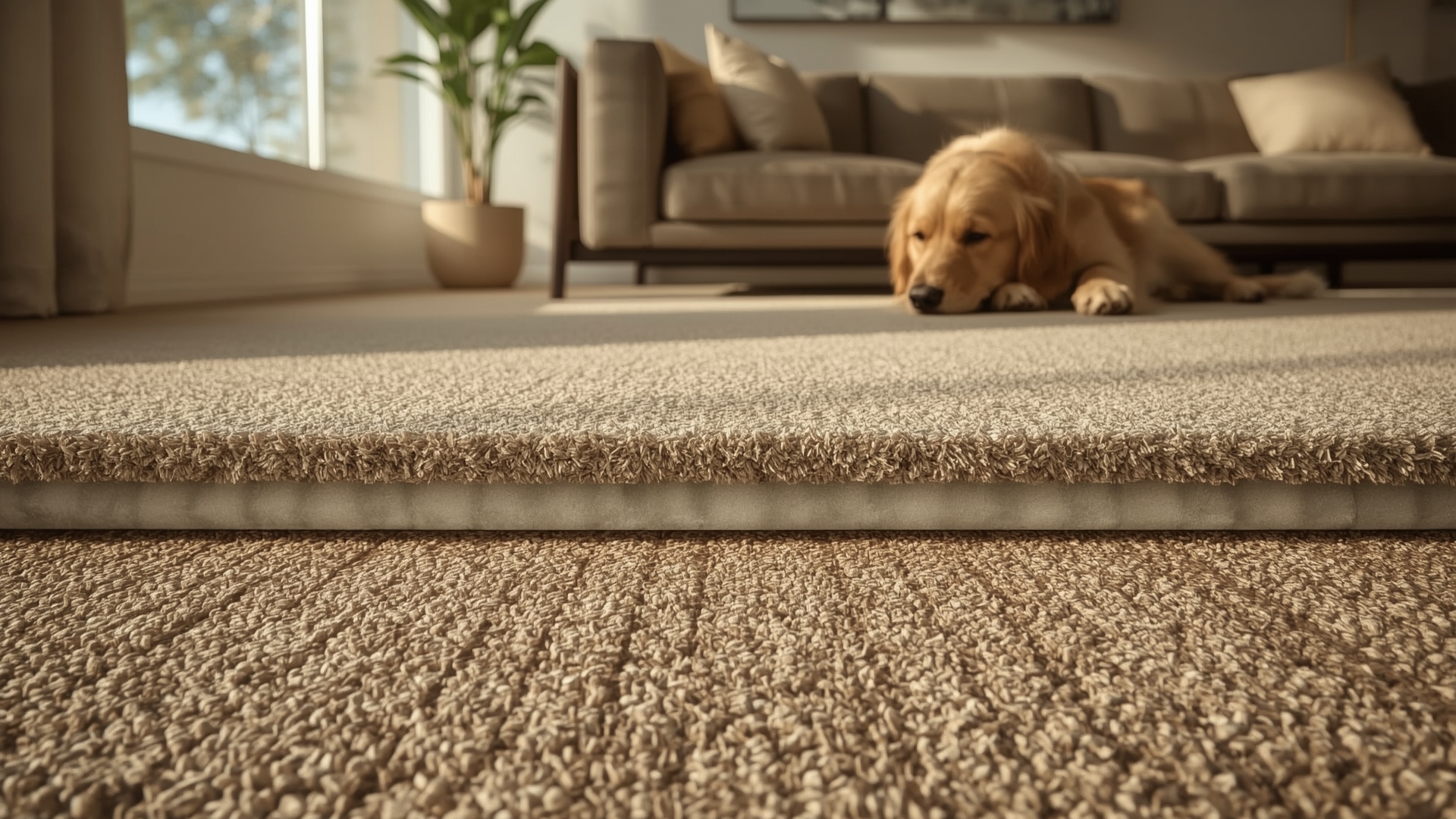
Shorter pile carpets like Berber or commercial loop carpet dry faster than plush or saxony styles. The tighter construction reduces the moisture reservoir the carpet can hold, so evaporation happens quickly. Plush carpet with a higher pile height holds more solution and typically maintains wet contact longer without intervention.
Carpet pad also plays a role. A thick, open-cell foam pad absorbs and holds moisture well, which actually helps extend enzyme contact time once contamination has reached that depth. A thin rubber pad or no pad at all offers almost no buffer, so the solution hits the subfloor quickly and the fibers dry out fast.
How Does Plastic Sheeting Extend Enzyme Dwell Time?

Quick Answer: Plastic sheeting creates a sealed microenvironment over the treated carpet area. It traps evaporating moisture against the surface, keeps humidity near 100% directly above the carpet, and prevents airflow from drying out the enzyme solution. A single layer of 2 to 4 mil plastic sheeting works well.
This is the most effective dwell time extension method available without professional equipment. The plastic acts as a vapor barrier, preventing the water molecules in the enzyme solution from escaping into the room air. The humidity directly underneath the plastic stays near saturation, which means the enzyme solution stays wet far longer than it would in open air.
How to Apply Plastic Sheeting Over Enzyme Treatment
- Apply your enzyme solution generously to the stained area. Aim for full saturation, not just surface dampness.
- Cut a piece of plastic sheeting at least 6 inches larger than the treatment area on all sides.
- Lay the plastic flat over the wet carpet.
- Seal the edges with painter’s tape or weight them down with books or containers to prevent airflow from sneaking underneath.
- Leave the plastic in place for the full dwell time recommended on your enzyme product (typically 30 to 60 minutes for most applications).
- Remove the plastic and allow the carpet to dry completely before evaluating results.
Standard painter’s plastic drop cloth (2 to 4 mil thickness) works well. Thin food wrap is too delicate and hard to seal. Heavier plastic tarps (6 mil and above) work but add unnecessary cost for this application.
Can You Leave Plastic Sheeting on Carpet Overnight?
Yes, for severe or deep contamination, leaving plastic sheeting in place for 8 to 12 hours is a legitimate and effective strategy. This extended dwell time approach works well for uric acid contamination that has fully penetrated the carpet backing and soaked into the pad. Keep the area off-limits to foot traffic and pets during this period.
One caution: if the room temperature drops significantly overnight, enzyme activity will also slow. Aim to maintain a room temperature between 65°F and 80°F during an extended dwell period for best results.
How Do Weighted Towels Help Maximize Enzyme Contact?
Quick Answer: Weighted towels slow surface evaporation, apply gentle downward pressure that pushes enzyme solution deeper into carpet fibers, and act as an insulating layer that moderates temperature swings. Stack two to three folded towels and place a flat weight on top for best results.
Weighted towels serve a dual purpose. First, they reduce the exposed surface area of the carpet, which slows evaporation. Second, the weight presses the wet enzyme solution downward into the carpet pile and toward the backing. This improves contact with contamination that has settled below the surface layer of fibers.
What Is the Correct Way to Use Weighted Towels for Enzyme Dwell?
- Apply enzyme solution to the target area and allow it to absorb for 2 to 3 minutes.
- Fold two to three clean, dry cotton towels to match the treatment area size.
- Lay the folded towels over the treated carpet.
- Place flat, heavy objects on top — books, sealed containers of water, cutting boards, or similar items. Aim for 5 to 15 pounds distributed evenly.
- Leave in place for the full dwell period.
- Remove and check if the towels are saturated. If they are completely soaked, the enzyme solution has wicked upward, which is useful feedback that you may need to apply more product.
Avoid using colored towels that might bleed dye onto the carpet. White or light-colored cotton towels are the safest option.
Combining Weighted Towels With Plastic Sheeting
Using both methods together produces better results than either alone. The layering sequence matters. Apply enzyme solution first. Place the towels on top to provide weight and insulation. Then cover everything with plastic sheeting and seal the edges. This combination slows evaporation, applies pressure, and traps humidity all at once.
What Temperature Is Best for Enzyme Carpet Cleaning?
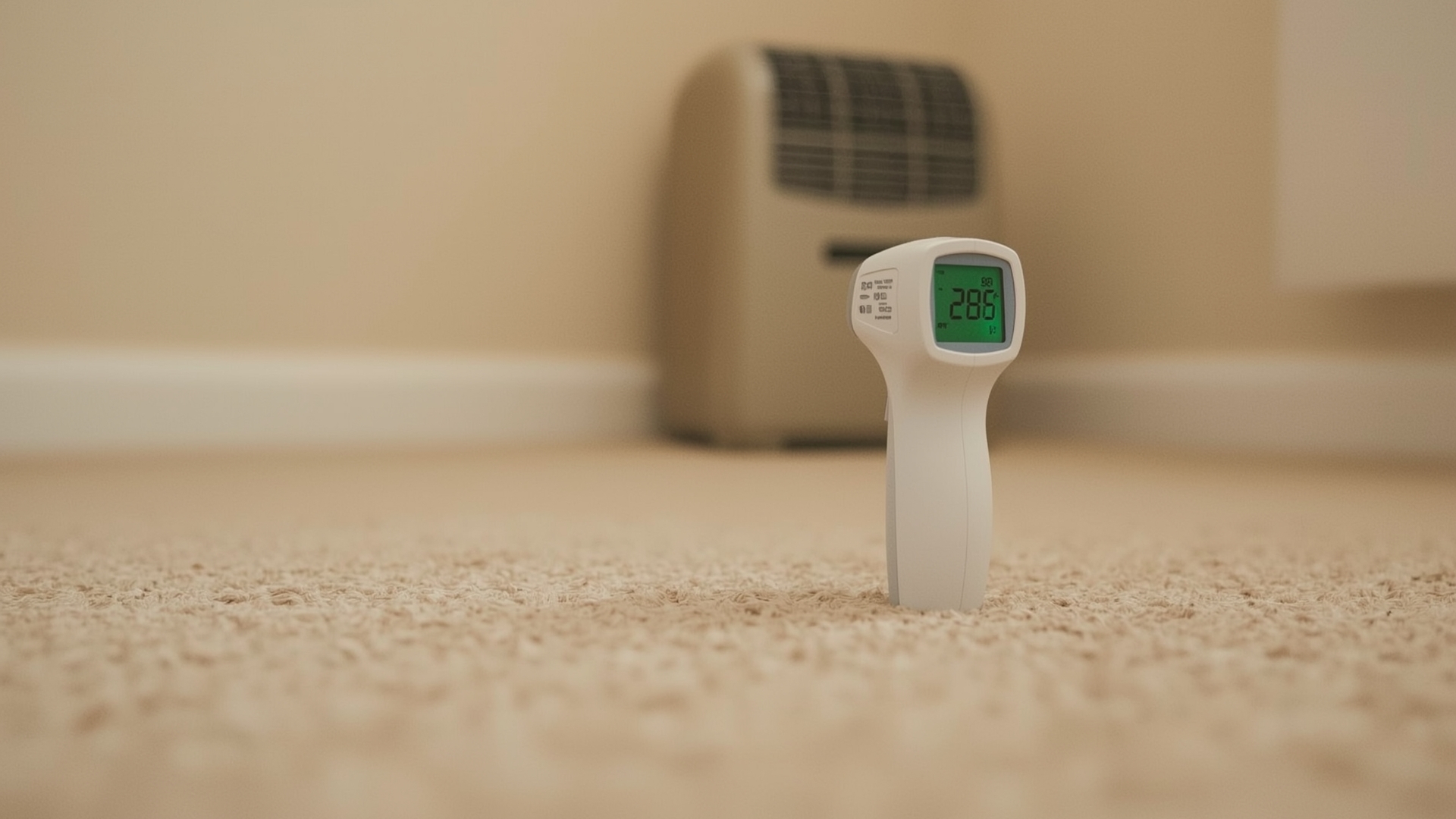
Quick Answer: Most carpet enzyme cleaners work best between 60°F and 85°F. Below 50°F, enzyme activity slows dramatically and may stop. Above 120°F, high heat denatures (permanently deactivates) the enzyme proteins. Room temperature between 68°F and 78°F is the practical sweet spot for home treatment.
Enzymes are proteins, and like all proteins, their shape determines their function. Temperature controls their activity level. Too cold and the molecules slow down, reducing reaction speed. Too hot and the protein structure unfolds, permanently destroying the enzyme’s ability to bind to its target.
Enzyme Performance at Different Temperatures
| Temperature Range | Enzyme Activity Level | Practical Effect on Carpet Treatment | Recommended Action |
|---|---|---|---|
| Below 50°F | Minimal to none | Reaction effectively stops; no odor breakdown | Heat room before treating |
| 50°F to 59°F | Reduced (25–50% of optimal) | Slow reaction; extend dwell time by 50% | Increase dwell time, use plastic sheeting |
| 60°F to 85°F | Optimal | Full enzymatic breakdown of target compounds | Standard dwell time applies |
| 86°F to 110°F | Declining (50–75% of optimal) | Faster evaporation partly offsets activity gains | Extend dwell time, increase moisture |
| Above 120°F | None (denatured) | Enzymes permanently destroyed; no stain action | Do not use hot water or steam before enzyme step |
How to Adjust Room Temperature Before Enzyme Treatment
In cold months, close the room off and run a space heater for 20 to 30 minutes before treating. Aim to bring the air temperature to at least 65°F. In summer, if the room is very hot (above 90°F), treat early in the morning when temperatures are lower, or run air conditioning to cool the space before applying the enzyme product.
One common mistake is using hot water to pre-wet or mix enzyme solution. Water above 120°F will destroy the enzyme proteins before they even contact the stain. Always use cool to lukewarm water (below 100°F) when diluting or pre-wetting with an enzyme-based product.
How Does Indoor Humidity Affect Enzyme Dwell Time on Carpet?
Quick Answer: Low indoor humidity (below 30%) causes enzyme solution to evaporate rapidly, cutting dwell time short. Keeping indoor humidity between 45% and 65% during enzyme treatment slows surface evaporation and gives the biological reaction more time to complete. A portable humidifier works well for this.
Humidity determines how quickly moisture leaves the carpet surface. In dry air, the vapor pressure gradient between the wet carpet and the room air is steep. Moisture moves fast from carpet to air. In more humid air, that gradient is smaller, so evaporation is slower.
You do not need to make the room feel damp or uncomfortable. Raising relative humidity from 25% to 50% can extend your practical dwell window by 15 to 25 minutes. That extra time is often the difference between a partial reaction and a complete one.
Practical Ways to Increase Room Humidity During Treatment
- Run a portable cool-mist humidifier in the treatment room for 30 minutes before and during dwell time
- Place bowls of warm water around the room to add passive evaporation
- Close windows and doors to contain any humidity already present
- Turn off forced-air HVAC (heating or cooling) to eliminate the drying airflow
- Use plastic sheeting as a complement — even if room humidity is low, the sealed microenvironment under the plastic stays humid
When Low Humidity Is a Bigger Problem
Dry climates and winter heating seasons create the most challenging conditions for enzyme dwell time. A home running forced-air heat in January can have indoor humidity as low as 15% to 20%. At those levels, enzyme solution on carpet can dry in 8 to 12 minutes. Even a full-saturation application will not maintain wet contact long enough for the reaction to complete without intervention.
In these conditions, plastic sheeting is not optional — it is essential. Combine it with a humidifier running in the room and you create a controlled environment that overcomes the drying effect of the heating system.
Should You Pre-Wet Carpet Before Applying Enzyme Solution?
Quick Answer: Yes. Pre-wetting carpet with plain cool water before enzyme application prevents dry fibers from absorbing the product unevenly. It also dilutes any pH-altering substances in the carpet (like old cleaning product residue) that could reduce enzyme effectiveness. Use enough water to dampen but not fully saturate.
Dry carpet fibers act like a wick. When you apply enzyme solution to completely dry carpet, the fibers draw the liquid in rapidly and unevenly. The enzyme concentration in the solution drops quickly as it disperses, and the surface dries faster than if the fibers were already partially saturated.
Pre-wetting creates a more even distribution environment. The fibers absorb water first. When you apply the enzyme product immediately after, it sits on top of that moisture layer more evenly and penetrates more slowly and consistently. This improves both coverage and dwell time.
Pre-Wetting Method for DIY Enzyme Treatment
- Fill a spray bottle with cool water (below 100°F).
- Spray the treatment area lightly — enough to dampen the fibers but not create puddles.
- Wait 60 to 90 seconds for the water to distribute through the pile.
- Apply your enzyme solution immediately after while the fibers are still damp.
- Proceed with your plastic sheeting or weighted towel dwell method.
What Is the Full Step-by-Step Process for Maximum Enzyme Dwell Time?
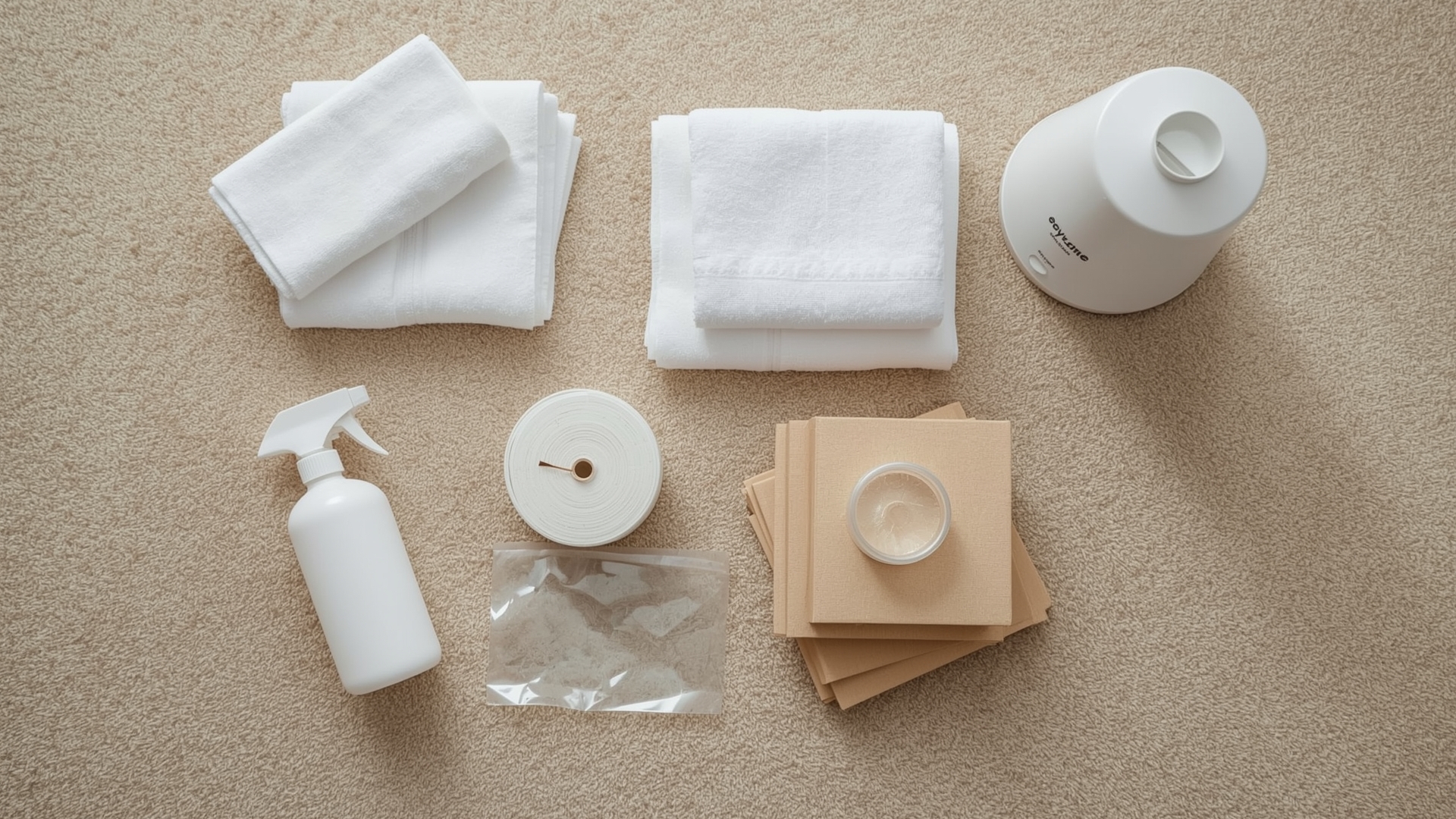
Quick Answer: The complete process combines pre-wetting, generous enzyme application, plastic sheeting sealed at the edges, weighted towels on top, controlled room temperature between 65°F and 80°F, and maintained humidity above 45%. This approach can extend active dwell time from 10 minutes to 45 minutes or more.
Complete Dwell Time Extension Protocol
- Prepare the room. Close windows and doors. Turn off HVAC airflow. If indoor humidity is below 40%, run a humidifier for 20 minutes before starting.
- Remove surface debris. Vacuum the treatment area to remove dry soil. Enzymes work on organic chemistry, not loose dirt.
- Check room temperature. Confirm the carpet surface temperature is between 60°F and 85°F. Use a surface thermometer if available. Heat or cool the room as needed.
- Pre-wet the area. Lightly mist the treatment zone with cool water and wait 60 to 90 seconds.
- Apply enzyme solution generously. Spray or pour enough to fully saturate the carpet pile. For deep contamination that has reached the pad, apply enough that you can feel moisture resistance when you press down with your hand.
- Agitate lightly. Use a soft-bristle brush or your gloved hand to gently work the enzyme solution into the fibers. This improves contact between the enzyme molecules and the contamination.
- Cover with weighted towels. Lay two to three folded dry towels over the treatment area. Place 5 to 15 pounds of flat weight on top.
- Seal with plastic sheeting. Lay 2 to 4 mil plastic sheeting over the towels and extend it at least 6 inches past the treatment area. Tape or weight the edges to seal.
- Wait the full dwell time. For standard stains, 30 to 45 minutes. For deep pet urine contamination, 60 minutes to overnight.
- Extract and dry. Remove the plastic and towels. Use a wet/dry vacuum to extract the solution from the carpet. Allow the area to dry fully before replacing furniture or allowing foot traffic.
How Many Times Should You Apply Enzyme Treatment to Stubborn Carpet Odors?
Quick Answer: Severe or layered contamination typically requires two to three applications of enzyme treatment with proper dwell time between each session. One heavy application rarely outperforms two careful applications. Wait 24 hours between treatments to allow full drying and assessment.
Deep pet urine contamination often involves multiple layers: carpet fiber, carpet backing, adhesive layer, pad, and sometimes the subfloor. A single enzyme application, even with extended dwell time, may only fully reach the first two layers. A second application — after the first has dried and you can re-evaluate odor — reaches the same area with fresh enzyme product and can address remaining chemistry at greater depth.
Do not apply a second treatment on top of a still-wet first treatment. Flooding the area with excess moisture without proper drying leads to mold and mildew growth in the pad and subfloor, which creates a different and harder-to-solve problem.
Signs That a Second Enzyme Application Is Needed
- Odor is reduced but still detectable after the first treatment dries fully
- A black light (UV light) still reveals staining in the treated area
- The treated area feels stiff or crusty after drying, suggesting salt deposits remain
- Humidity causes the odor to return within 24 to 48 hours of initial treatment
What Common Mistakes Reduce Enzyme Effectiveness on Carpet?
Quick Answer: The most common mistakes are applying enzyme solution to pre-cleaned areas with alkaline residue, using hot water that destroys the enzymes, not applying enough product, and wiping or blotting the solution before the reaction is complete. Each error can make your treatment completely ineffective.
Enzyme Application Errors and Their Impact
| Mistake | Why It Hurts Effectiveness | Correct Practice |
|---|---|---|
| Using hot water to dilute enzyme product | Temperatures above 120°F denature enzyme proteins permanently | Always use cool or lukewarm water below 100°F |
| Applying enzyme over alkaline cleaner residue | High pH environments above 9.0 deactivate most enzyme formulations | Rinse carpet with water first to remove prior cleaning product residue |
| Blotting or scrubbing during dwell time | Removes enzyme solution before the reaction completes | Leave undisturbed during full dwell period |
| Underapplication of product | Insufficient enzyme contact with contamination depth | Apply enough to feel moisture through fibers with light hand pressure |
| Treating in direct sunlight or near a heat vent | Accelerates evaporation and may overheat enzyme solution | Block sunlight, redirect or turn off HVAC vents in treatment area |
| Not allowing full drying before re-evaluation | Wet carpets mask residual odor; you cannot accurately assess results until dry | Wait 12 to 24 hours after extraction before sniff-testing |
The Alkaline Residue Problem
This is one of the most underappreciated failure points. Many household carpet cleaners, spotters, and shampoos are formulated at a high pH (alkaline). If you apply an enzyme product on top of those residues, the high pH environment immediately reduces enzyme activity. The enzyme cleaner essentially fights the chemistry of the last product you used instead of working on the stain.
Before enzyme treatment, always flush the area with plain cool water and extract as much of the prior cleaner as possible. This neutralizes the pH environment and gives your enzyme product a clean foundation to work in.
Do Enzyme Products Have a Shelf Life That Affects Dwell Time Performance?
Quick Answer: Yes. Most enzyme cleaners have an active shelf life of 12 to 24 months when stored properly. After that, enzyme proteins degrade and lose their catalytic effectiveness. Storing products in extreme heat or freezing temperatures can shorten that shelf life significantly.
If your enzyme product is past its shelf life or was stored incorrectly, extending dwell time will not compensate for lost enzyme activity. The product simply does not have enough functional enzyme molecules left to complete the reaction, regardless of how long it stays wet.
Enzyme Cleaner Storage and Shelf Life Reference
| Storage Condition | Expected Shelf Life | Effect on Enzyme Activity |
|---|---|---|
| Cool, dry, dark storage (50°F to 75°F) | 18 to 24 months | Full activity maintained through shelf life |
| Room temperature with temperature swings | 12 to 18 months | Gradual activity reduction over time |
| Storage above 90°F (garage, car trunk) | 3 to 6 months | Accelerated protein degradation |
| Exposed to freezing temperatures | Compromised immediately | Ice crystals can rupture enzyme structures |
| Direct sunlight exposure | 1 to 3 months | UV radiation degrades enzyme proteins |
Check your enzyme product for an expiration date or batch code indicating manufacture date. If you are unsure, a simple test is to apply a small amount to a piece of raw chicken or fresh pet waste and watch for visible fizzing or a noticeable reaction within 5 to 10 minutes. Active enzymes create a visible chemical response on fresh organic material.
When Should You Call a Professional Instead of Extending DIY Dwell Time?
Quick Answer: Professional intervention is warranted when contamination has fully saturated the carpet pad, reached the subfloor, or when multiple DIY enzyme treatments with proper dwell time have failed. Professionals use sub-surface extraction tools and commercial-grade enzyme products at concentrations not available to the public.
The extended dwell time methods in this guide work well for carpet-level and shallow pad contamination. When the contamination has soaked through the pad and saturated the subfloor — which is common with long-term or repeated pet accidents in the same spot — the concentration of uric acid and bacterial byproducts is far beyond what any surface enzyme application can reach.
A professional can inject enzyme solution directly into the pad layer using sub-surface tools, extract it from below the carpet, and assess moisture levels in the subfloor using moisture meters. These capabilities change the treatment equation significantly.
Frequently Asked Questions
Can I use plastic wrap from the kitchen instead of plastic sheeting?
Kitchen plastic wrap can work in a pinch, but it is difficult to seal flat over a carpet surface without gaps. It tears easily and tends to wrinkle, which allows airflow underneath. A painter’s plastic drop cloth from a hardware store is inexpensive, more durable, and much easier to seal at the edges with tape.
What happens if I leave enzyme solution on carpet too long?
Most enzyme products are safe on synthetic carpet fibers for extended periods. However, leaving enzyme solution on natural fiber carpets like wool for more than 6 to 8 hours can cause fiber damage or color change. Always check the product label for maximum dwell time recommendations and confirm the product is safe for your carpet fiber type before extending treatment.
Does agitating the enzyme solution with a brush improve results?
Yes. Light agitation with a soft-bristle brush after applying the enzyme product helps work the solution into the lower layers of the carpet pile and improves contact between the enzyme molecules and the target contamination. Use a gentle back-and-forth motion with light pressure. Aggressive scrubbing can damage carpet fibers and is not necessary.
Can enzyme cleaners remove old, dried pet stains?
Enzyme cleaners can break down old, dried stains, but they require re-hydration first. Old uric acid crystals are dry and solid. The enzyme solution must dissolve them back into liquid form before the enzymatic reaction can proceed. Pre-wetting thoroughly and extending dwell time with plastic sheeting is especially important for old stains. Multiple treatment sessions may be needed.
Is a wet/dry vacuum necessary after enzyme treatment?
A wet/dry vacuum is strongly recommended. Leaving the enzyme solution and dissolved organic material in the carpet after the reaction completes allows bacterial growth as the carpet dries slowly. Extraction removes the byproducts of the enzymatic reaction along with residual solution. Without extraction, drying time is longer and the risk of mold in the pad increases.
Why does my carpet smell worse right after enzyme treatment?
This is a normal temporary reaction. Enzyme treatment re-liquefies dried uric acid crystals and reactivates the organic compounds. As they break down, they release odor molecules briefly before the enzymatic reaction converts them to odorless byproducts. The smell typically peaks during or just after the dwell period and should decrease significantly once the carpet dries fully.